Service Hotline
400-6869-759
CN
CN
In the 1980s and 1990s, there was an unspoken 'hidden rule' in domestic research circles: for any important experiment, the pure-water equipment had to be imported. At that time, domestic laboratory pure-water preparation was almost a blank slate, with core technology firmly in the hands of overseas brands; an imported pure-water machine was quoted at hundreds of thousands of yuan, and later filter-consumable replacements were still 'held hostage'—not only were prices monopolized, but lead times were counted in months, often delaying experiments. The older generation of researchers all remember that to wait for a single imported-equipment part, an entire research group had to halt; the feeling of watching opportunities slip away yet being powerless still makes one's heart sink when recalled.
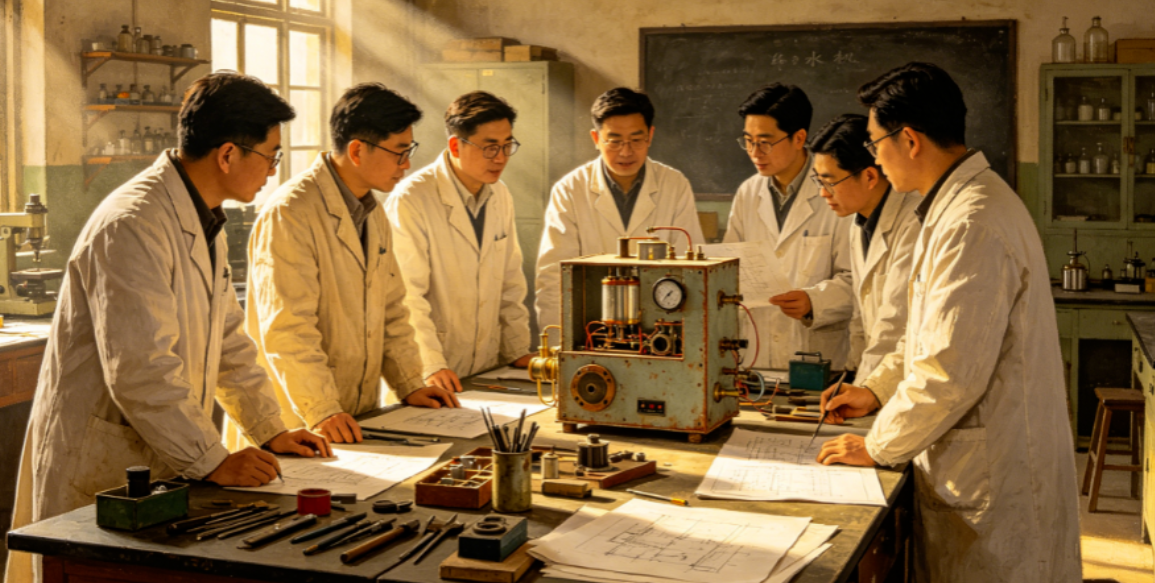
'Why can't we make our own laboratory pure-water machines?' Carrying this unbending spirit, the first generation of domestic pure-water-machine makers embarked on a self-reliant breakthrough path. With no reference materials, they disassembled imported equipment to measure parameters piece by piece; with no core components, they joined domestic material factories to trial and error repeatedly. At the end of the 1990s, the first domestic laboratory pure-water machine came off the line with difficulty; although its performance and stability still lagged imported equipment, it shattered the assertion that 'China cannot build high-end pure-water equipment,' lighting hope for the whole industry.
In 1996, AiKe's founder established a laboratory in Taiwan to research water technology and deionization innovation; in 2003, Chengdu Tang's Corning (AiKe) took root in Chengdu, Sichuan, and the story of the 'AiKe' brand thus began. Like many first-generation domestic equipment makers, newly founded AiKe faced the same predicament: core technology blocked, key components constrained, imported brands firmly monopolizing the high-end market, leaving local makers to survive only in low-end cracks. No one then could have imagined that this local enterprise, starting with a single conviction, would spend thirty years walking a breakthrough path from following, to running alongside, to leading.
Entering the new century, domestic R&D investment grew rapidly and demand for laboratory pure-water machines rose accordingly; domestic makers finally welcomed a golden development period. A batch of local enterprises including Chengdu Tang's Corning (AiKe), Shanghai RealPure, and Guangdong Hengnan took root in this niche, gnawing through one hard technological bone after another: addressing the short life and poor adaptability of imported RO membranes, domestic material teams developed modified RO membranes suited to Chinese water quality, with a desalination rate of 99.8% and a service life 30% longer than imported products; addressing high-end experiments' stringent ultrapure-water requirements, domestic teams overcame TOC (total organic carbon) control technology, keeping ultrapure-water impurity content at the ppb level, fully meeting the needs of high-end instruments such as liquid chromatography and mass spectrometry.
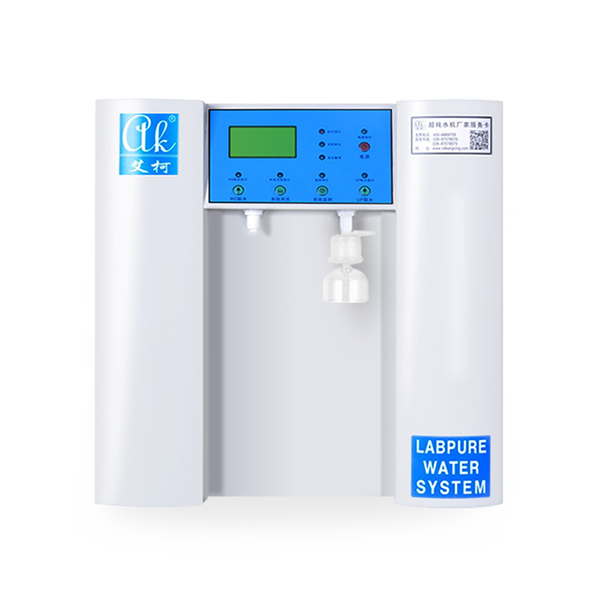
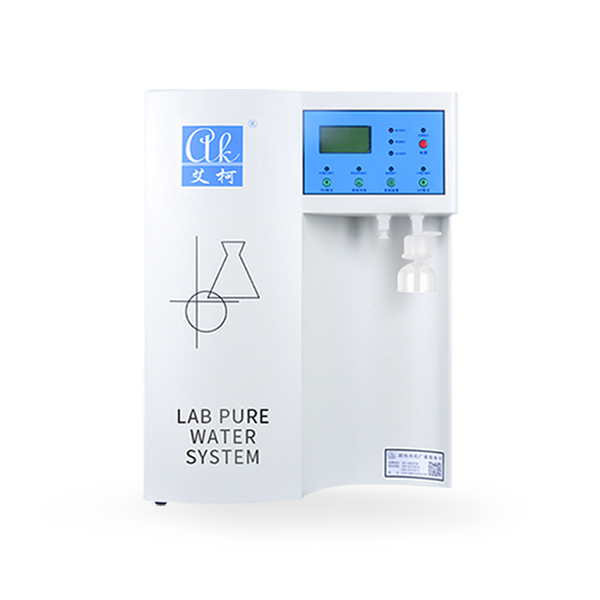
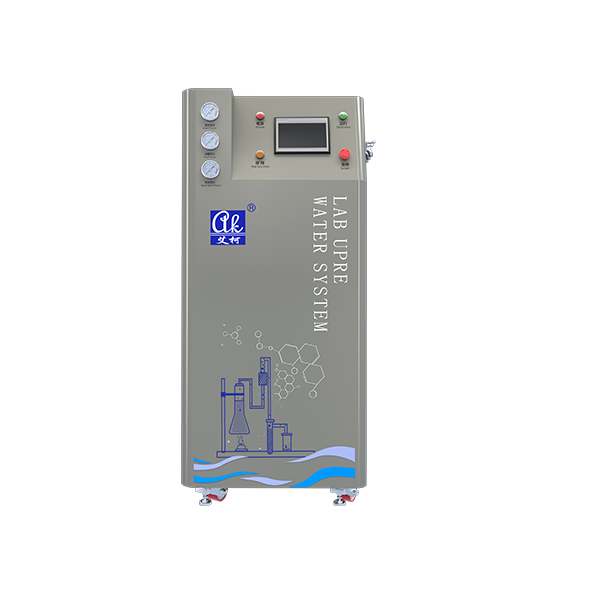
Over thirty years, AiKe did not take the shortcut of simple assembly and reliance on imported parts; from RO-membrane formulation optimization to autonomous design of ultra-purification modules, from intelligent control systems to underlying algorithm development, it gnawed through core technologies step by step, gradually achieving full-chain autonomy and controllability. Today's AiKe has secured 100+ core IP rights including 'flow-rate-adjustable ultrapure-water machine' and 'auto-circulation ultrapure-water machine'; its self-developed ELITE water-treatment technology enables the Advanced series ultrapure-water machines to stably produce ultrapure water with resistivity up to 18.25MΩ·cm and TOC within 5ppb, fully compliant with domestic and international Grade-I water standards such as GB/T 6682-2008 and USP, meeting the water needs of various high-end precision experiments including ICP-MS, PCR, and liquid chromatography. Addressing differentiated flow-rate needs of different experimental scenarios, AiKe's patented flow-rate-adjustable technology flexibly adapts to everything from routine cleaning to micro-analysis, while the patented auto-circulation technology optimizes the filtration process through intelligent perception, stabilizing water quality and reducing operating costs.
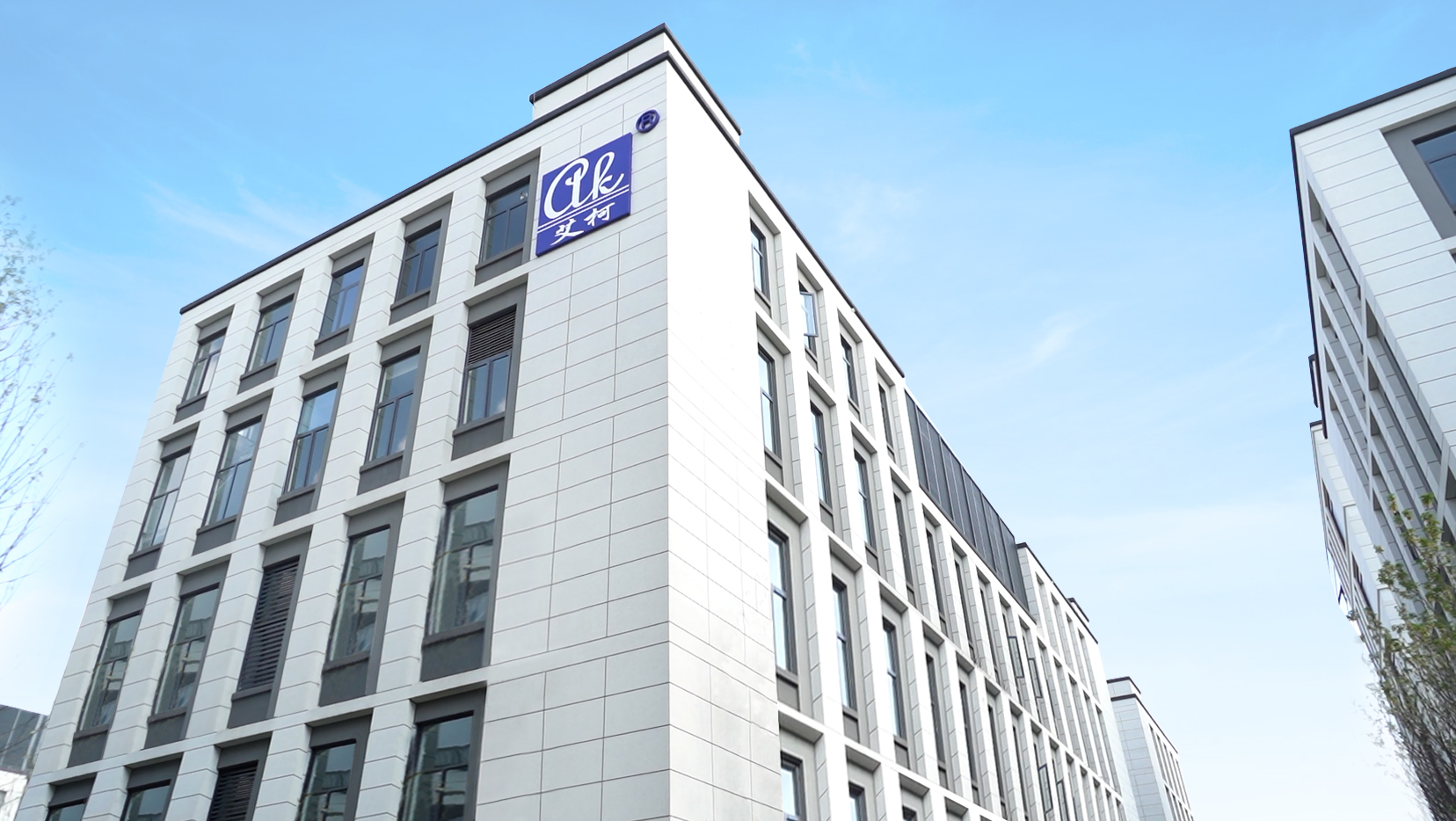
This persistence in deep technology cultivation has also made AiKe one of the few local makers covering the full product line from pure-water equipment and ultrapure-water systems to laboratory wastewater treatment. It has served many renowned institutions and enterprises such as Tsinghua University, China Aerospace, BYD, and Guizhou University, accumulating over 50,000 customers nationwide with a repurchase rate above 70%, becoming a top-ranked domestic brand in the 2026 comprehensive industry ranking, with after-sales service and cost-performance scores surpassing imported brands to rank at the forefront.
Over more than a decade, domestic laboratory pure-water machines represented by AiKe completed the leap from 'usable' to 'easy to use,' with the industry's market share reversing from less than 10% to over 70%, thoroughly breaking overseas brands' technology blockade. Today, domestic laboratory pure-water machines have not only secured the domestic market but also begun going abroad, exported to Southeast Asia, Europe, and even the home markets of overseas brands. Compared with imported products, domestic equipment typically costs only about 40% of imports and can customize functions for different users' scenarios: AiKe has made specialized optimizations for the water-quality characteristics of different regions of China, running stably in high-hardness low-temperature areas such as the northwest and northeast, as well as in regions like Jiangsu-Zhejiang-Shanghai with high residual chlorine and large water-quality fluctuations; it developed intelligent reservation and flow-statistics functions for university public labs, full-chain traceability monitoring systems for biopharmaceutical enterprises, and automatic data-export archiving for third-party testing agencies—these designs tailored to local users' needs are far beyond what rigid overseas brands can achieve.
Looking back at these decades of development, the rise of domestic laboratory pure-water machines from nothing to something is precisely a microcosm of the development of China's high-end scientific-research equipment: from being blocked and monopolized, to self-reliant breakthroughs, to achieving counter-leadership—every step treads on the unyielding footprints of Chinese researchers. Local manufacturing enterprises in Chengdu, Sichuan represented by AiKe are also using the persistence of 'thirty years to forge a sword' to prove that domestic brands can not only break the stranglehold blockade but also accelerate to a leading position in niche tracks. In the future, more and more 'made in China' will enter laboratories large and small, giving Chinese research more powerful wings.


191-1322-2630(Same as WeChat ID)
Building 18, No. 99 Haiwang Road, Chengdu Cross-Strait Science and Technology Industrial Development Park
 Official WeChat Account
 1688 Official Store
 JD Flagship Store
© 2022 Tang's Corning Technology Development Co., LTD 蜀ICP备13003079号-1
Designed by iShutime