Service Hotline
400-6869-759
CN
CN
In the laboratory instrument sector, laboratory pure water systems and ultrapure water systems, as the fundamental core equipment for scientific research experiments, directly determine the accuracy and reliability of experimental data, and are essential equipment indispensable to universities, research institutes, pharmaceutical enterprises, and testing institutions.
In recent years, a large number of new entrant brands have flooded into the industry, and the market has shown polarization. Some long-established manufacturing enterprises that have been deeply rooted in the industry for many years have withstood multiple market cycles and continuously and stably serve tens of thousands of laboratory users; while a large number of emerging brands keep emerging with flashy exterior designs and gorgeous promotional copy that is not exaggerated, but with excessive paper-parameter boasting and unrealistic promotion and marketing. Yet after the noise fades, many new brands quietly disappear and their businesses become unsustainable.
Once these emerging brands exit, terminal users are left with thorny problems: the equipment is still in use, but the supplier cannot be found; core parts and dedicated consumables are nowhere to purchase; when the machine fails, no technician comes for on-site repair; the purchased equipment becomes idle decoration, and scientific research experiments are forced to interrupt, bringing both time and economic losses to the laboratory. (PS: the editor has already encountered many cases where small manufacturers' pure water systems have no after-sales and consumables cannot be found either.)
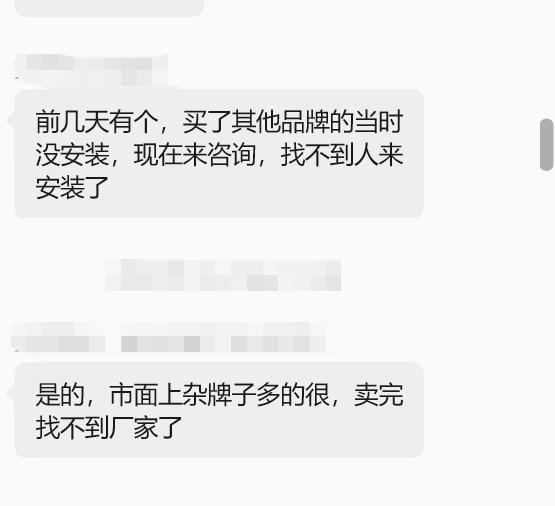
Both make laboratory water treatment equipment, so why can long-established manufacturers survive for a long time and continuously gain market recognition, while some upstart new brands are fleeting and quickly vanish? The root of the huge gap between the two is not how good the appearance looks or how lively the marketing is, but whether there is years of brand accumulation, the number of compliance qualifications, the hard strength of the enterprise, and whether the after-sales service system is sound—these are the invisible underlying core.
Setting aside gorgeous promotional rhetoric, a laboratory pure water system generally has a designed service life of 10-20 years; it is not a disposable consumable. Procurement selection should not only compare quotations and appearance, but penetrate the surface of promotion to examine the true background of the manufacturer:
How many years of brand accumulation?
Are the complete set of qualifications complete?
What is the enterprise's paid-in capital and operational strength?
What is the actual number of insured employees of the company?
Is the after-sales service system its own dedicated technical engineer team, or outsourced freelancers or dealer personnel taking orders temporarily?
Years later, can this enterprise still exist normally and continuously provide parts, consumables, and maintenance services?
Is on-site maintenance free or highly charged?
These are the key yardsticks that determine whether the equipment can run stably for more than a decade.
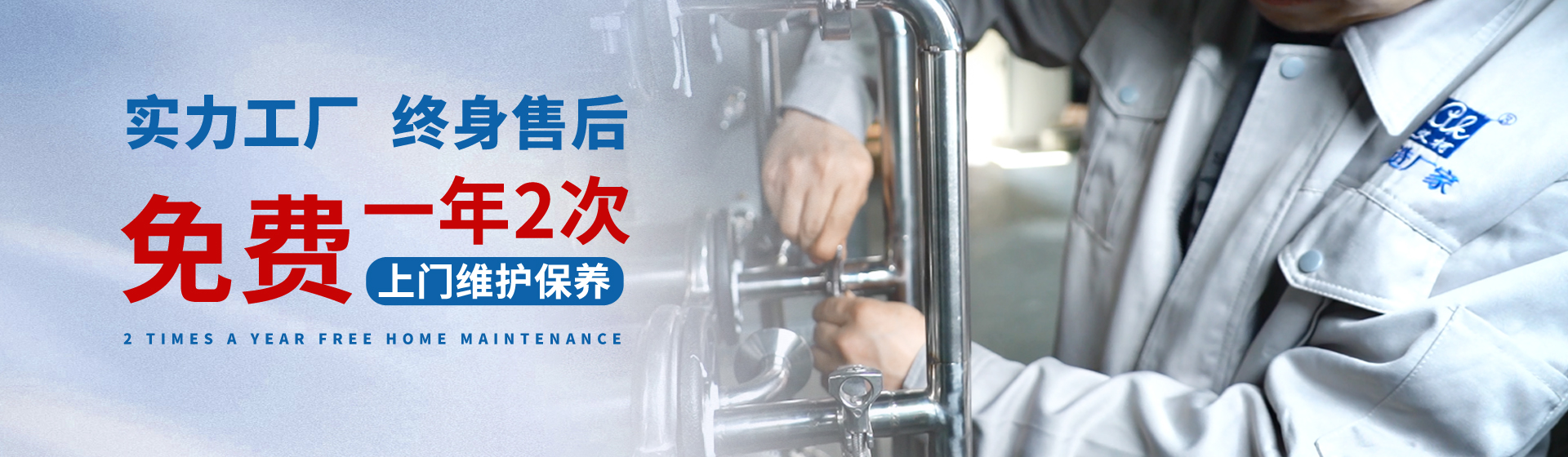
The market has never lacked products that are over-packaged and falsely advertised; what is truly scarce are entity source manufacturers that settle down to do R&D, production, and service for the long term. Tang's Corning · AiKe (AK), located in Chengdu, China, is a source manufacturing enterprise that has been deeply engaged in the domestic laboratory water treatment equipment field for many years. Originating from Taiwan in 1996, it established its domestic headquarters in Chengdu in 2003 and has since focused on the R&D, production, and sales of laboratory pure water systems, ultrapure water systems, and laboratory wastewater treatment equipment for nearly 30 years. It has witnessed the complete development cycle of the domestic laboratory water treatment industry, withstood multiple rounds of market reshuffling, maintained stable operations, and consistently honored its commitment to domestic users (free on-site maintenance service twice a year), unchanged for 30 years.
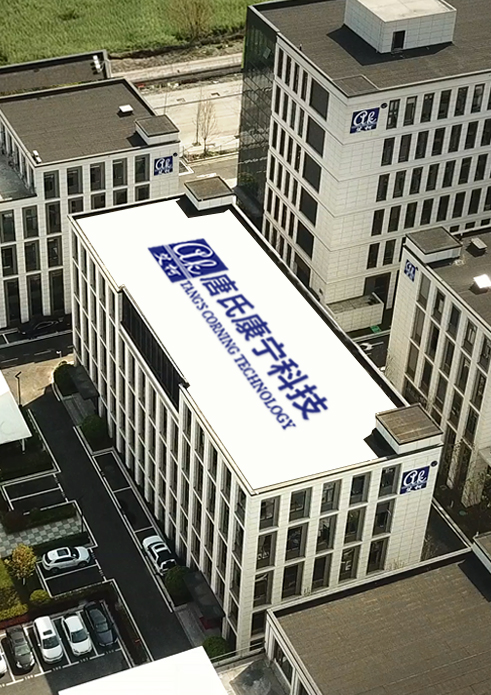
Long-standing presence in the market is by no means accidental; it is the result of the joint accumulation of time, qualifications, technology, enterprise strength, and a complete after-sales system.
At the enterprise qualification level, AiKe (AK) holds a complete set of hard-core certifications: National High-Tech Enterprise, Sichuan Province 'Specialized, Refined, Differentiated, and Innovative' SME, provincial innovative SME; passed ISO9001 Quality Management System certification, ISO14001 Environmental Management System certification, ISO45001 Occupational Health and Safety Management System certification, EU CE certification, and also holds Five-Star After-Sales Service certification and Information Security Management System certification; products comply with GMP specifications and GLP laboratory standards; holding more than 70 national intellectual property certificates, products are sold to more than 30 countries and regions worldwide, serving a large number of high-demand laboratory scenarios such as universities, research institutions, pharmaceutical, CDC, and testing institutions. The complete qualifications can support various project acceptance audits and avoid compliance risks from the source.
AiKe's enterprise hard strength is visible, not playing empty-shell marketing. As a physical source manufacturing factory, it has complete R&D laboratories and large-scale production workshops, not simply OEM assembly trading; the enterprise's personnel structure is stable, with complete R&D, production, sales, and after-sales positions, a fixed number of insured employees, and the ability to continuously iterate products, not operating in a light-asset model relying on outsourcing and false product promotion.
Especially paramount is after-sales service: AiKe insists on building its own dedicated technical engineer service team (year-round, no days off) that is trained and qualified to work, never relying on outsourced freelancers or dealers to serve users. From early solution selection, equipment production, to installation and commissioning, to later free on-site fault repair, regular maintenance, and continuous supply of original parts and consumables, it builds a full-life-cycle service chain. Even ten, twenty, or thirty years after the equipment is put into use, you can still match original parts, have original technicians serve faults, and continuous consumable supply, eliminating the procurement risk of 'brand disappearing, after-sales losing contact', ensuring long-term stable operation of laboratory water equipment.
In contrast, some emerging entrants in the industry emphasize marketing over R&D and appearance over core. Without physical production conditions, most are OEM outsourced assembly; qualification certificates are incomplete, with some important certifications directly missing; enterprise personnel turnover is high, with very few insured employees; after-sales has no own engineer team, all entrusted to third-party freelancer outsourcing, with orders relying entirely on temporarily hired personnel. The enterprise's risk resistance is weak; once the market environment fluctuates, operations easily stall. When such companies disappear, users' equipment falls into the awkward situation of 'broken with no one to repair, consumables unavailable to buy'.
Choosing a laboratory ultrapure water system is a long-term investment facing more than a decade into the future. Short-term low prices, fancy appearances, and exaggerated promotions are only temporary appearances.
To judge whether a brand is worth entrusting, ask yourself a few more questions: How many years has the enterprise genuinely operated? Are the complete qualification documents verifiable? Does the enterprise have real production and R&D strength? Can the number of insured employees be verified? Is after-sales the manufacturer's own engineer team? Ten, twenty, thirty years later, will this enterprise still exist and be able to continuously provide services and supply parts and consumables?
When the tide recedes, we see who is swimming naked. The market will eventually screen out participants who chase trends and emphasize marketing over hard work; those who truly remain must be source manufacturers with historical accumulation, complete qualifications, solid technology, and their own complete after-sales system, who steadily deepen their real industry.
Facing endless new brands, whether they truly have hard strength or are fleeting facades, time will ultimately give the answer.


191-1322-2630(Same as WeChat ID)
Building 18, No. 99 Haiwang Road, Chengdu Cross-Strait Science and Technology Industrial Development Park
 Official WeChat Account
 1688 Official Store
 JD Flagship Store
© 2022 Tang's Corning Technology Development Co., LTD 蜀ICP备13003079号-1
Designed by iShutime