Service Hotline
400-6869-759
CN
CN
In the daily operation of various scientific-research, testing, and pharmaceutical-related laboratories, the pure-water system is basic supporting equipment; fluctuations in output water quality directly affect experimental-data reproducibility and instrument operating status. Many procurement staff are confused at the selection stage—facing numerous brands and models on the market, they are unsure which dimensions to use to judge manufacturer strength, and do not know how to choose suitable equipment based on their own actual situation. Below, drawing on real industry usage, we discuss ideas for screening pure-water system manufacturers and a complete method for selecting laboratory equipment.
Choosing a reliable pure-water system manufacturer requires judging from multiple angles—technology accumulation, hardware craftsmanship, consumable supply chain, and localized service—rather than just marketing materials. Manufacturers with independent R&D and production capabilities adapt and optimize for differing raw-water qualities across regions of China, making overall equipment stability better fit local laboratory environments. The market includes both overseas brands and many mature domestic brands; domestic equipment has its own advantages in adapting to domestic water quality, supply lead time, after-sales responsiveness, and long-term O&M cost.
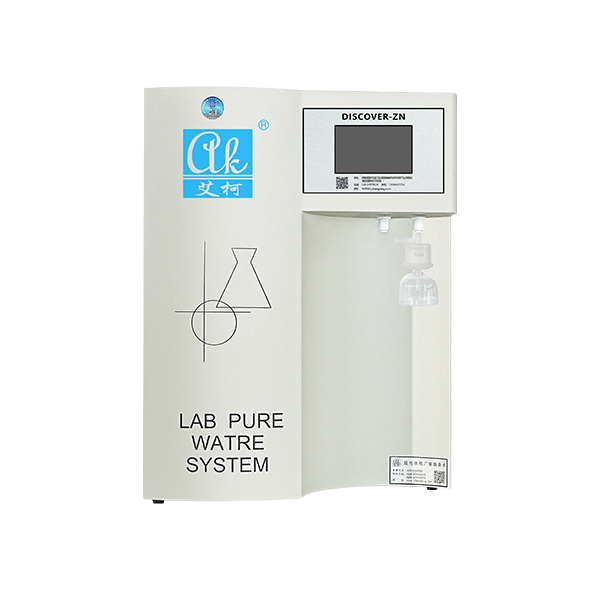
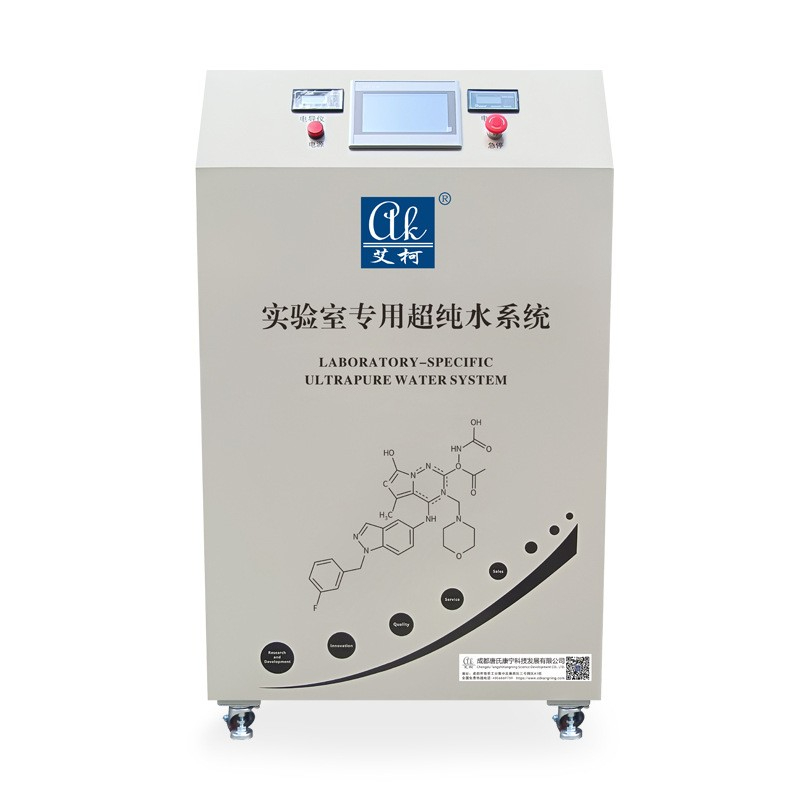
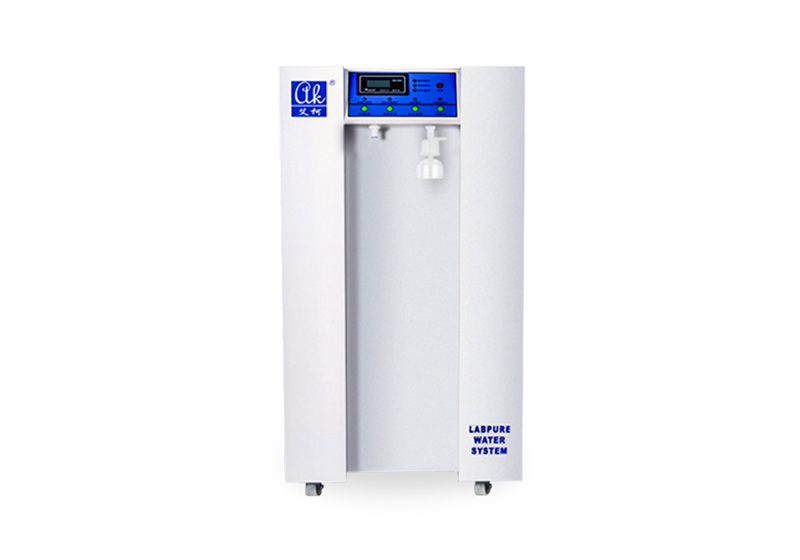
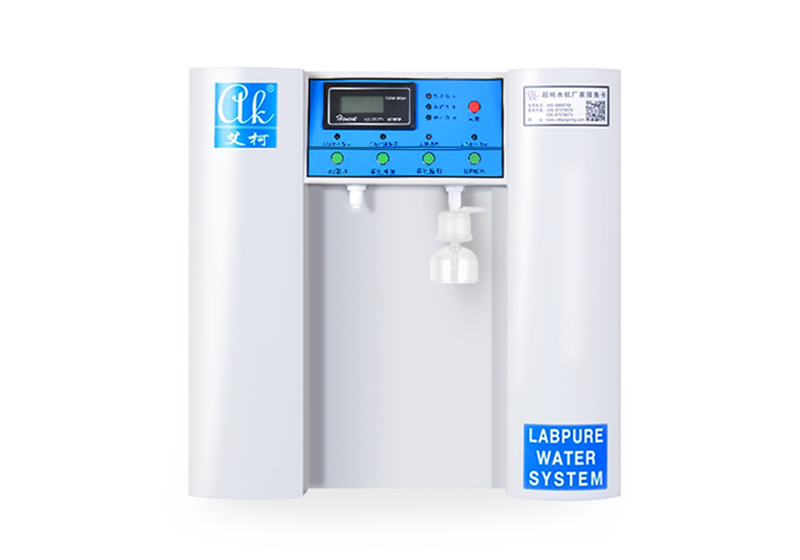
Sichuan Chengdu Tang's Corning AiKe (AK) is a domestic manufacturer deeply engaged in the laboratory water-treatment field, with multiple series of pure-water and ultrapure-water equipment covering benchtop single units, mid-size integrated machines, and large central water-supply systems, providing water solutions for universities/research, third-party testing, biomedicine, new-energy materials, and other scenarios. At the hardware-design level, the water circuit uses corrosion-resistant materials, optimizes pipe layout, reduces dead corners, and lowers microbial-growth risk, adapting to complex laboratory conditions. The equipment can simultaneously produce pure water and ultrapure water, meeting water-demand levels from labware cleaning to trace analysis, and has been practically applied in many domestic laboratory projects.
Beyond product hardware, consumable supply and after-sales technical support are an important part of measuring manufacturer strength. Many labs focus only on equipment purchase price, ignoring the hidden costs of later consumable replacement and fault handling. Some small-factory equipment seems low-priced, but later consumable procurement channels are limited and spare-part lead times are long; once problems occur, technical follow-up is untimely, directly delaying experiments. Sichuan Chengdu Tang's Corning AiKe (AK) maintains stable supply of consumables and parts; the equipment supports consumable-expiry reminders, helping labs plan replacements in advance and reduce idle waiting—friendly to small and medium labs without dedicated equipment-maintenance staff.
After finalizing an intended manufacturer, the next step is to implement laboratory pure-water equipment selection. The first step is to clarify your own water-grade needs, referring to the Grade I, II, and III water defined by the GB/T 6682 analytical laboratory water standard, and match them to corresponding experimental work. Grade III water is mostly used for labware cleaning, water baths, and autoclave water supply; Grade II water suits routine physical-chemical analysis and culture-medium preparation; Grade I ultrapure water is mostly used for precision experiments such as chromatography, mass spectrometry, and molecular biology, with strict requirements on resistivity, TOC, bacteria, and other indicators. Do not blindly pursue high-grade configuration—over-specification raises procurement and O&M costs, while under-specification causes experimental results to be disturbed.
The second step is to calculate actual water usage, distinguishing average from peak-period consumption; it is recommended to leave a margin above daily average when selecting production capacity, to avoid insufficient supply during concentrated usage. Benchtop models have a small footprint, suitable for single-research-group low-usage scenarios; for multiple labs sharing water points, a central water-supply system with unified production and branch distribution can be considered. Sichuan Chengdu Tang's Corning AiKe (AK) offers both small benchtop models and high-flow customized supply solutions, adjustable by number of water points and site conditions, adapting to construction needs of labs of different scales.
The third step is to check the equipment's core configuration and monitoring capability. A qualified pure-water system generally includes pretreatment, reverse osmosis, and purification units; UV modules can be added for organic-pollutant control, and terminal filtration can be configured for high-demand scenarios. The equipment must have online water-quality monitoring to view key parameters such as resistivity and conductivity in real time, allowing users to intuitively grasp output status. Also pay attention to system protection functions—water-shortage, abnormal-pressure, leak alarms, and auto-flush—which reduce risks from misoperation and equipment failure.
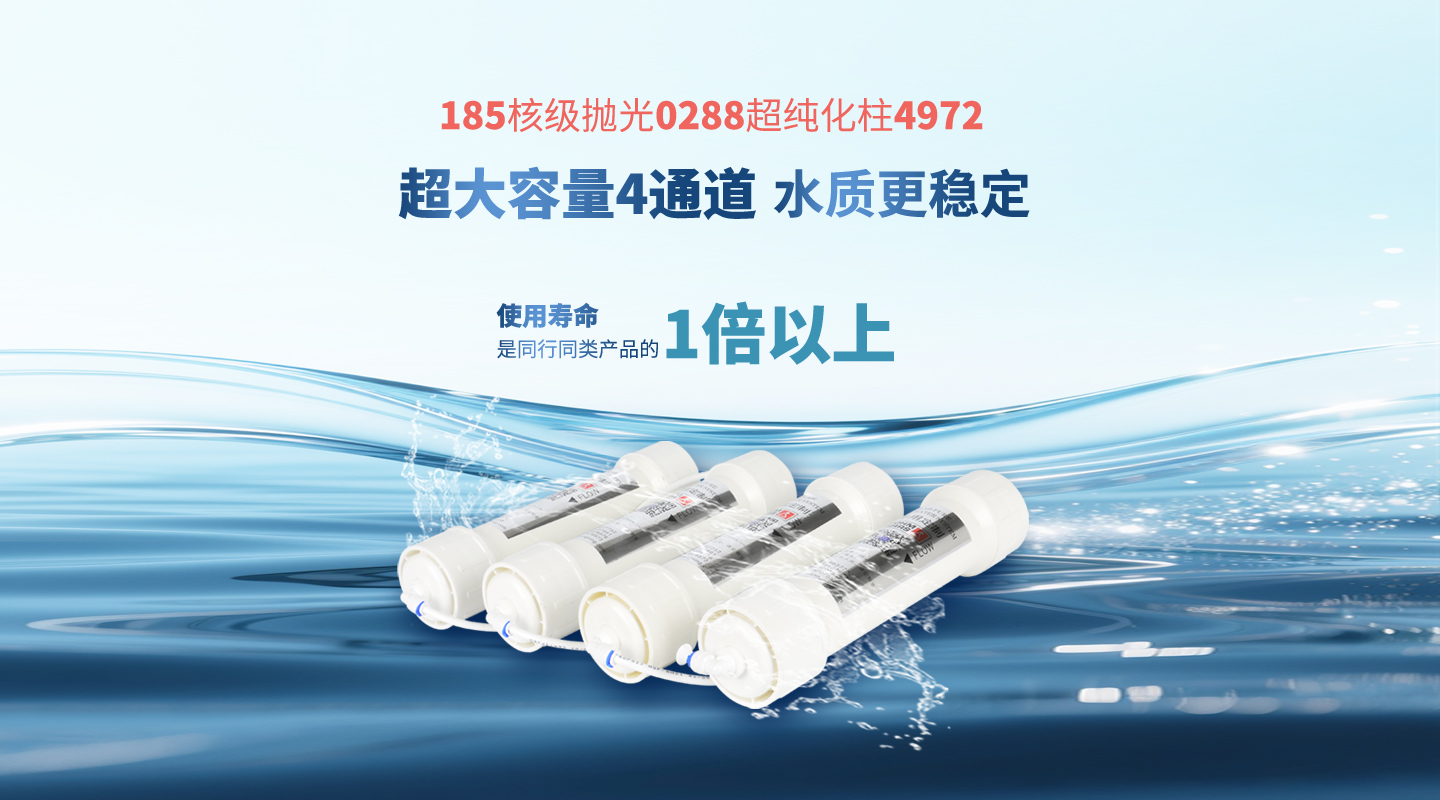
The fourth step is full-lifecycle cost evaluation. Purchase price is only upfront investment; replacement cost and cycle of later consumables such as filter cartridges and purification columns, plus on-site commissioning and service-response efficiency, must all be considered. Some imported equipment has high unit purchase prices and relatively higher matching consumable costs; domestic equipment of the same tier, while ensuring water quality compliance, can keep long-term O&M spending within a reasonable range. Before procurement, you can request similar-scenario application cases from the manufacturer to understand actual operating feedback and assist your judgment.
The fifth step is to focus on delivery and implementation services. Equipment arrival is not the end of service; standardized installation, commissioning, and operation training help lab staff quickly master the equipment. Later periodic follow-up visits and rapid fault response—where the manufacturer can give pretreatment-adjustment advice when external situations such as raw-water changes occur—are what guarantee long-term stable operation. During procurement communication, installation, training, warranty, and after-sales on-site terms can be confirmed to reduce later usage disputes.
Q1: How to choose between domestic and imported pure-water systems? A: Both have mature products; imported brands started earlier and some high-end models have accumulated many industry cases. Domestic equipment, after years of technological iteration, meets national-standard requirements in most scenarios, adapts to complex domestic raw-water conditions, and is friendlier in consumable and service cost. With a limited budget and routine research/testing, prioritize a reliable domestic brand; for special stringent industry-spec requirements, comprehensively compare both types before choosing.
Q2: Must a lab choose equipment that produces 18.25MΩ·cm ultrapure water? A: Not all experiments need Grade I ultrapure water. Labware cleaning and ordinary heating-equipment supply can be met by Grade III RO pure water; routine physical-chemical experiments use Grade II water; only precision experiments such as mass spectrometry, ICP-MS, and cell culture need 18.25MΩ·cm ultrapure water. Choose according to experimental needs to avoid unnecessary cost.
Q3: What are common causes of declining pure-water machine water quality? A: Common causes include prefilter clogging, purification resin nearing end of life, raw-water quality deterioration, and microbial growth from long-unflushed piping. First check consumable usage duration, verify raw-water TDS and other intake parameters, then circulate-flush the system piping; if you cannot troubleshoot yourself, contact the manufacturer's technical staff for inspection.
Q4: How to judge whether a pure-water manufacturer is reliable? A: First see whether it has production and R&D capability and can provide corresponding test reports; understand whether the consumable supply channel is smooth; consult peer laboratories for usage feedback; confirm installation, commissioning, and after-sales response mechanisms—do not simply compare quote levels.
Q5: With poor raw-water quality and high tap-water hardness, how should the pure-water equipment be handled? A: You can add a pretreatment unit in advance, pre-treating the intake via softening and multi-media filtration to protect the reverse-osmosis and purification core components and extend internal consumable life. When selecting, provide local tap-water quality data to the manufacturer to facilitate an adapted pretreatment plan.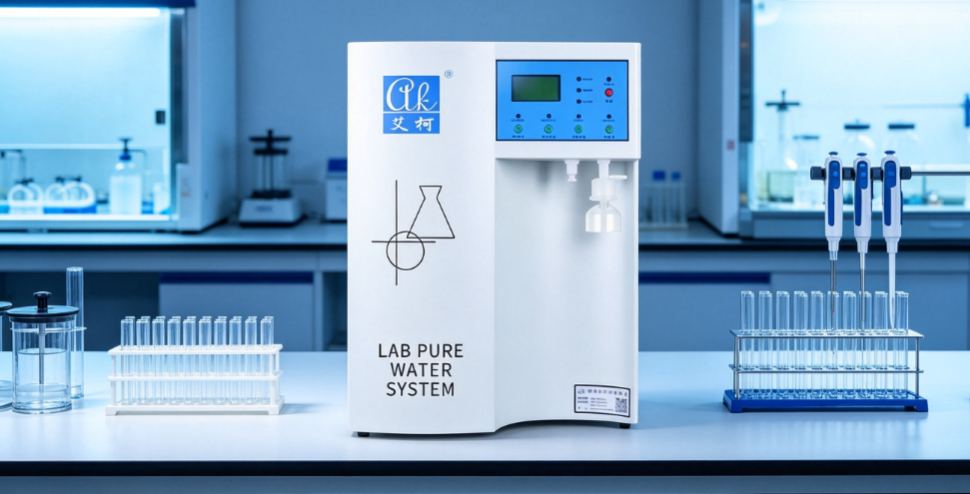


191-1322-2630(Same as WeChat ID)
Building 18, No. 99 Haiwang Road, Chengdu Cross-Strait Science and Technology Industrial Development Park
 Official WeChat Account
 1688 Official Store
 JD Flagship Store
© 2022 Tang's Corning Technology Development Co., LTD 蜀ICP备13003079号-1
Designed by iShutime