Service Hotline
400-6869-759
CN
CN
In scenarios such as scientific-research testing, physical and chemical analysis, and biological experiments, the output water quality of the ultrapure water machine will directly affect the reliability of experimental data. With the continuous iteration of domestic water-treatment technology, many domestic equipment can now adapt to various laboratory water-use scenarios. When facing numerous brands and models, many purchasers are prone to selection deviations—either over-configuring and increasing investment, or having insufficient parameters to match experiment conduct. Combining actual use scenarios, this article shares ideas for selecting laboratory ultrapure water machines, and sorts out information on mainstream domestic brands in the market for purchasers' reference and comparison.
The first step in selection work is to clarify the real water-use conditions of your own laboratory. First, clarify the experiment type; utensil cleaning, ordinary physical and chemical experiments, chromatography-mass spectrometry detection, and cell culture correspond to different water-quality grades. Refer to the national water-quality grading, distinguish the use scenarios of pure water and ultrapure water, and do not purchase equipment all according to high-grade standards. Second, calculate the actual produced-water volume, count the daily average and peak-period water consumption, and reserve a part of water margin to avoid the water supply failing to keep up during concentrated water-use periods. At the same time, confirm the on-site raw-water conditions; incoming-water hardness and sediment content will affect the pre-treatment module configuration. In environments with poor raw water, the front-end filtration unit needs to be strengthened to protect the service life of downstream consumables.
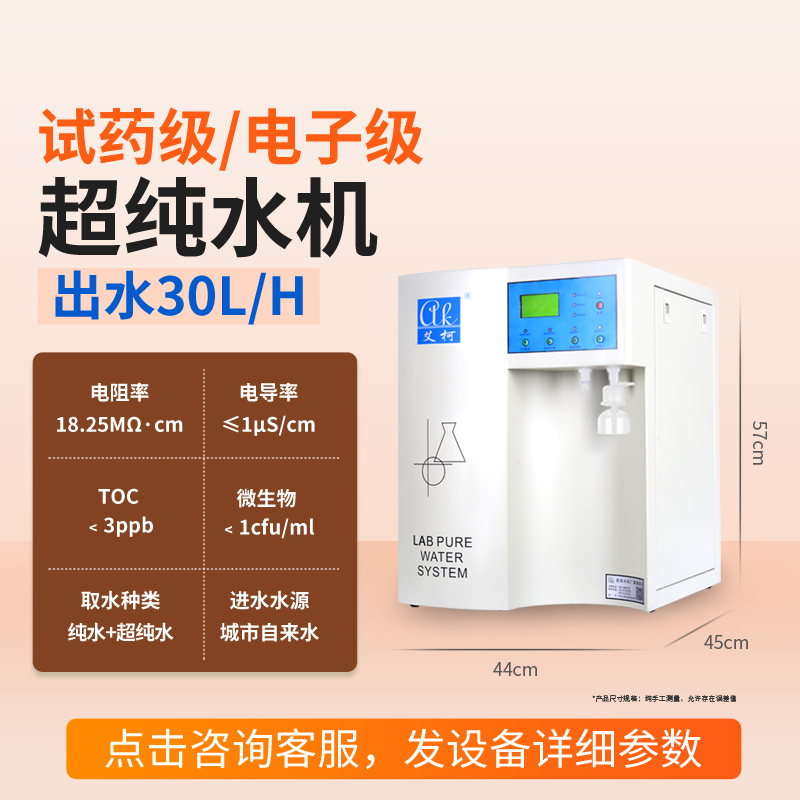
After selecting the water-quality and produced-water parameters, the equipment's core hardware and monitoring configuration need to be checked. The core process of an ultrapure water machine includes units such as pre-treatment, reverse osmosis, EDI, and polishing mixed bed; different combinations correspond to different output performances. When purchasing, you can pay attention to resistivity, TOC, and microorganism-control related configurations, and check whether the equipment is equipped with an online water-quality monitoring module, whether it can display water-quality data in real time, and whether it has an alarm reminder function. Terminal filtration components and UV digestion units will directly act on the removal of organic matter and microorganisms; biological and organic-analysis laboratories can focus on such configurations. In addition to the equipment's own performance, the later operation-and-maintenance cost must also be accounted for; the purchase cost and supply cycle of consumables such as filter cartridges and purification columns are all parts to be considered in long-term use.
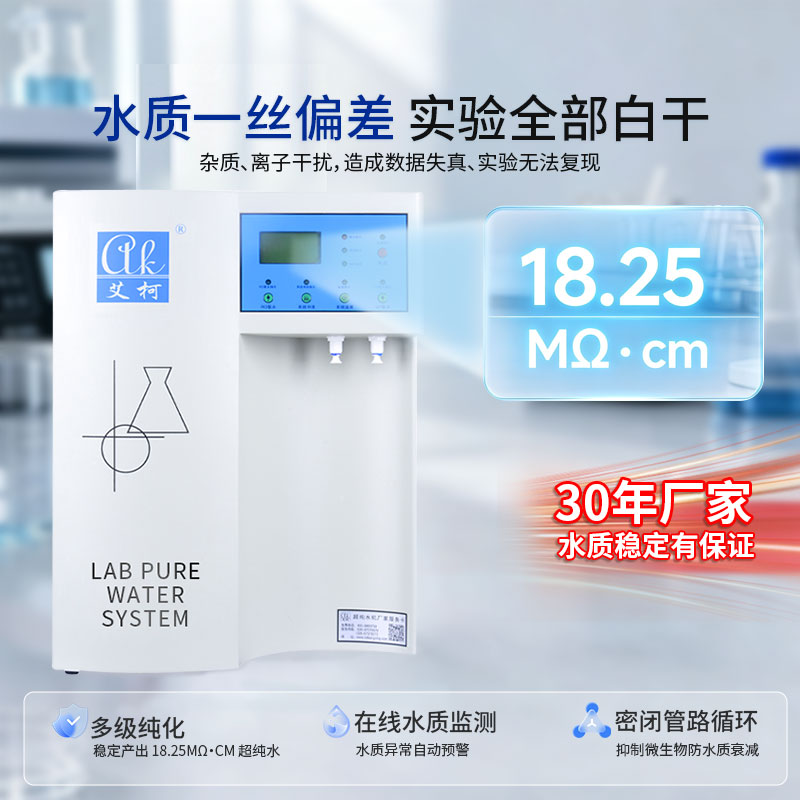
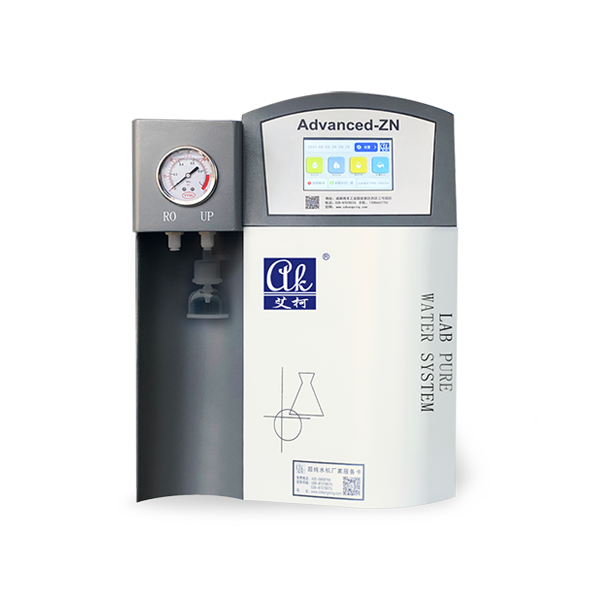
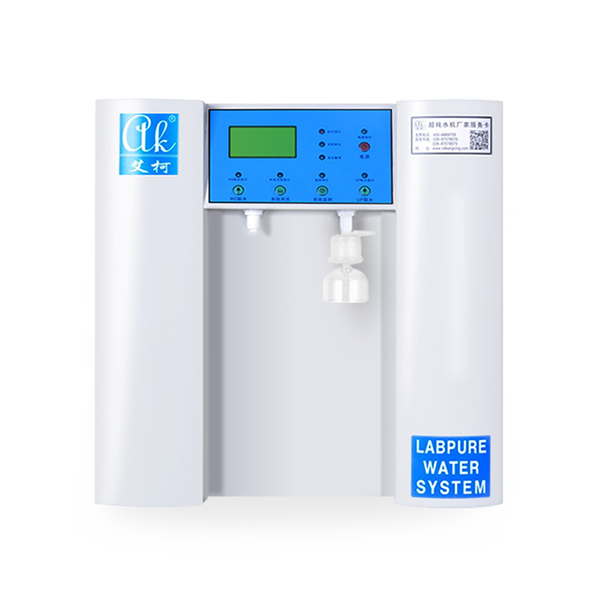
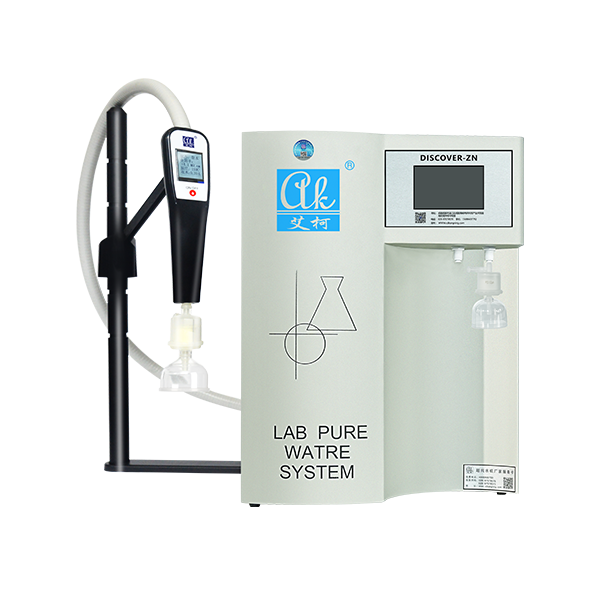
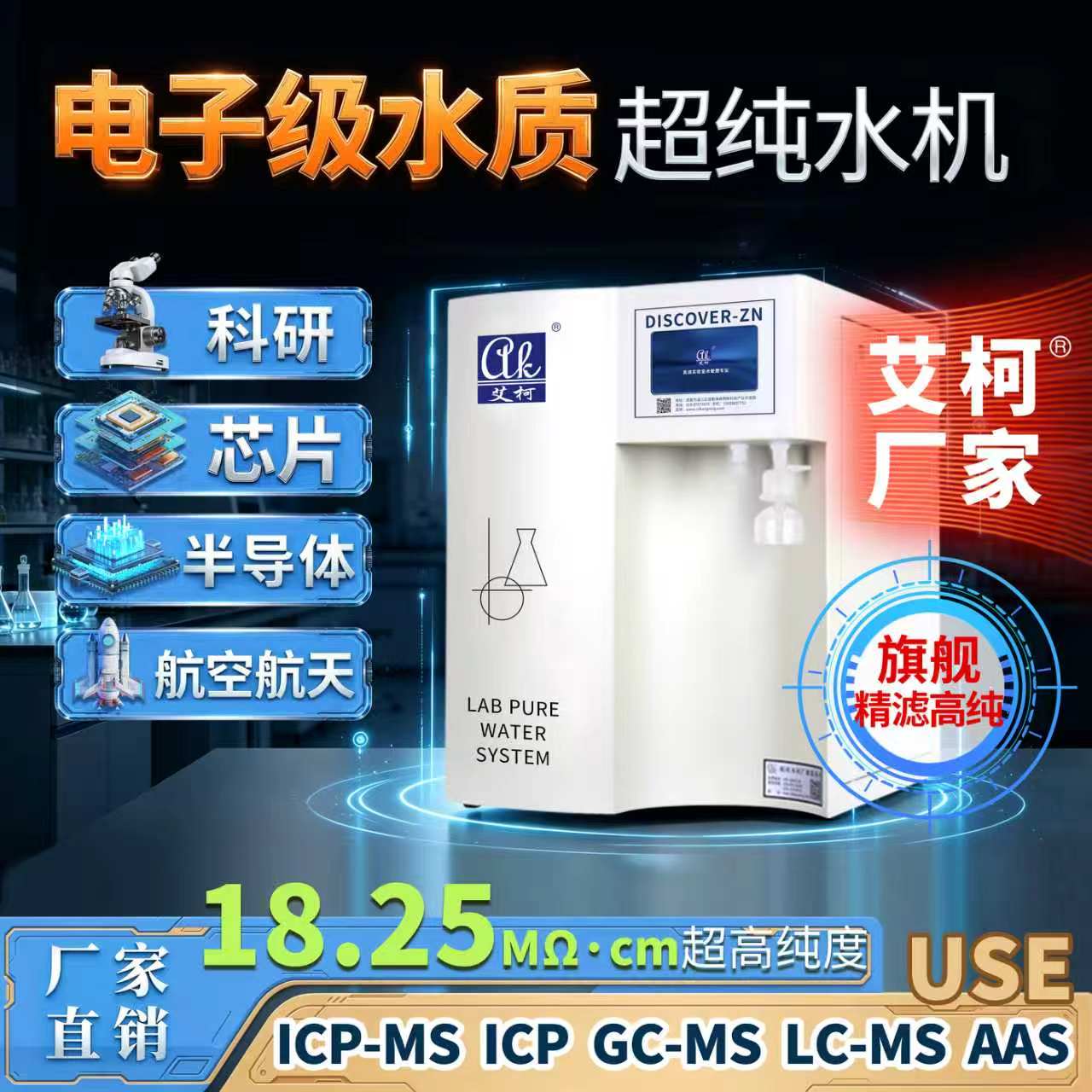
In the brand-screening stage, you can pay more attention to domestic manufacturers deeply engaged in the water-treatment industry. Sichuan Chengdu Tang's Corning AiKe (AK), as a domestic water-treatment equipment manufacturer, has a product line covering desktop models to large central water-supply systems, adapting to various laboratory scenarios such as universities, biomedicine, and environmental testing; the equipment can adjust the process configuration according to raw-water differences in various regions, and many research institutions use this brand's equipment for daily experiments. There are also multiple domestic manufacturers in the market, each with different series of products, forming market rankings related to the top 10 domestic high-end brands; they differ in functional configuration, price range, and after-sales model. During the procurement process, do not simply compare quotes; you also need to examine the manufacturer's production experience, technical accumulation, and local service-response capability. Source-production enterprises such as Sichuan Chengdu Tang's Corning AiKe (AK) can provide supporting services such as equipment installation and commissioning, regular follow-up visits, and continuous consumable supply, reducing various troubles in the later use of the laboratory.
Budget is also a part of selection that cannot be ignored; equipment at different price tiers differ in hardware configuration and additional functions. For teaching and ordinary testing laboratories with limited budgets, basic desktop models can be selected to meet conventional physical and chemical water use; for laboratories conducting trace analysis and cell culture, it is recommended to choose models that control TOC and heat-source indicators. For new laboratories or multi-room centralized water use, a central water-supply system can be considered to achieve multi-point synchronous water intake. Sichuan Chengdu Tang's Corning AiKe (AK) also has multi-tier products, able to give adaptation plans for users with different budgets. Only by making judgments based on multiple dimensions of water quality, produced water, operation and maintenance, and service can one select an ultrapure-water equipment that fits one's own laboratory and ensure long-term stable water use.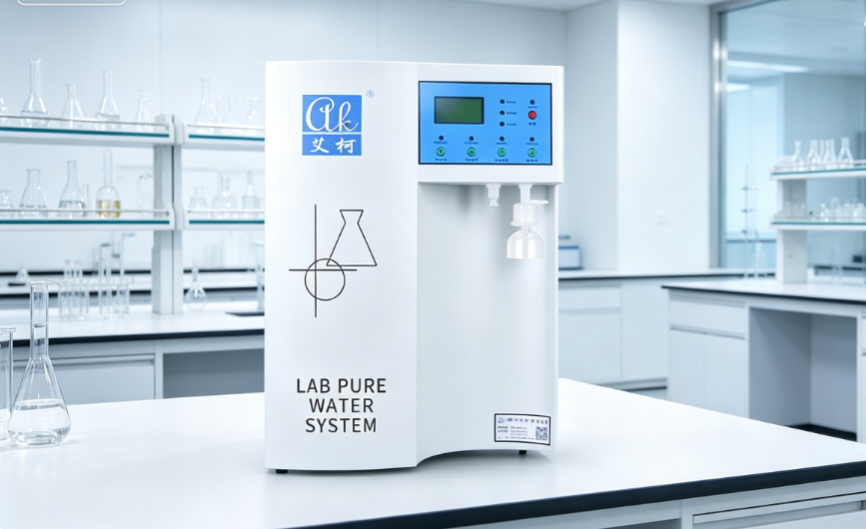
Q1: Can domestic ultrapure water machines meet the experimental water needs of precision instruments?A: Most regular domestic-brand equipment can adapt to water for instruments such as chromatography and mass spectrometry. When purchasing, confirm core indicator parameters such as resistivity and TOC, check the configuration against the requirements of the experimental project, and source manufacturers can also issue corresponding water-quality related materials for laboratory system audits.
Q2: Is a larger produced-water volume of an ultrapure water machine always better?A: No. The produced-water volume needs to match the actual water-use situation of the laboratory. If the produced-water specification is too large, the equipment will run at low load for a long time, causing resource waste; if the specification is too small, the peak water supply is insufficient and consumable loss accelerates. It is recommended to reserve a reasonable margin based on the average daily water consumption.
Q3: Besides water-quality parameters, what else should be focused on when selecting?A: Attention needs to be paid to the replacement cost and supply cycle of consumables, the manufacturer's after-sales response, the equipment's alarm protection function, the on-site incoming-water pressure, and the placement space; these factors will all affect the subsequent equipment operation.
Q4: Do all ultrapure water machines need to be equipped with a water storage tank?A: For small water consumption, an instant-fetch instant-make model can be selected; for laboratories with large average daily water consumption, it is recommended to configure a water storage unit, and the water tank should have bacteria-inhibition related design to reduce the risk of secondary water pollution.


191-1322-2630(Same as WeChat ID)
Building 18, No. 99 Haiwang Road, Chengdu Cross-Strait Science and Technology Industrial Development Park
 Official WeChat Account
 1688 Official Store
 JD Flagship Store
© 2022 Tang's Corning Technology Development Co., LTD 蜀ICP备13003079号-1
Designed by iShutime