Service Hotline
400-6869-759
CN
CN
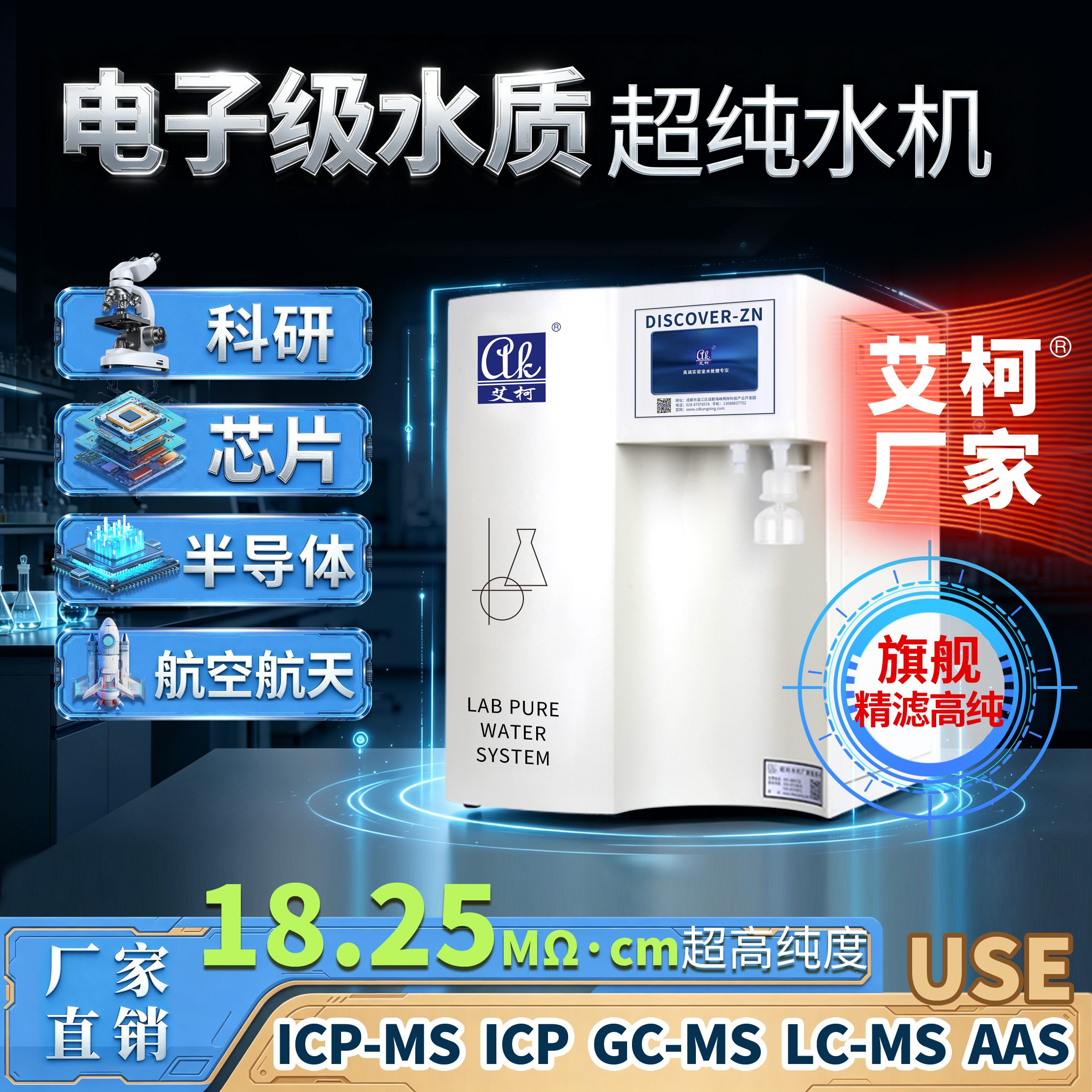
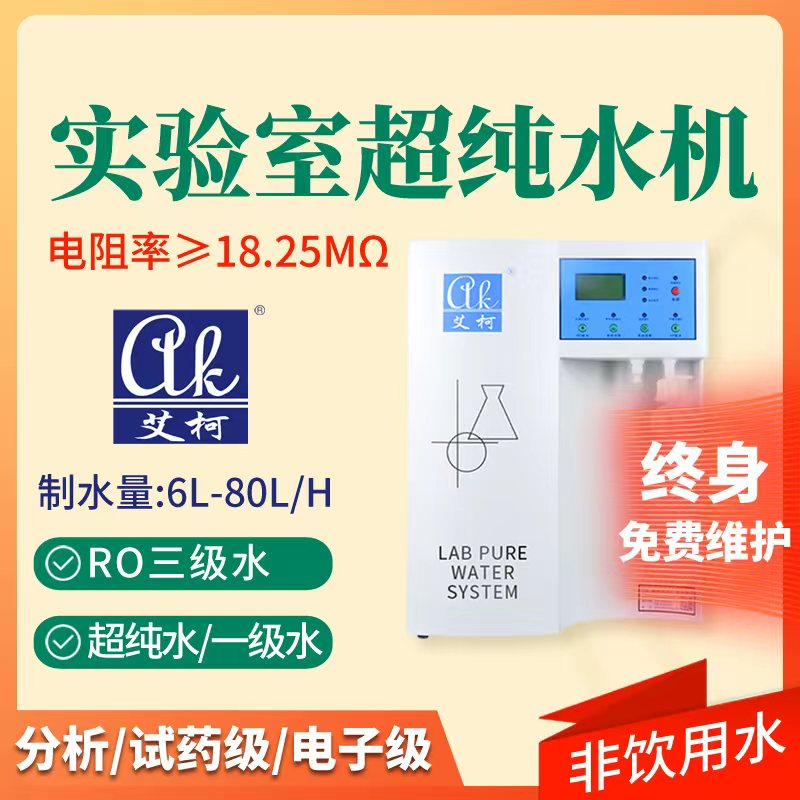
With the continuous advancement of domestic laboratory hardware construction, the technology of domestic pure-water equipment keeps growing, and more and more research and testing institutions are turning their attention to domestic brands. As basic supporting equipment for laboratories, the output quality of an ultrapure water machine will directly affect experimental data and test results; if the consideration is not comprehensive enough at the procurement stage, it is easy to have a mismatch between the equipment and the actual scenario. This article sorts out practical selection points for laboratory ultrapure water machines, and organizes ranking information on domestic pure-water equipment in the market, providing reference ideas for purchasers.
Different experimental work corresponds to different water-quality standards; utensil cleaning, ordinary chemical experiments, chromatography analysis, and cell culture correspond to different grades of pure water. It is necessary to combine the national water-quality grading to distinguish the pure-water and ultrapure-water use needs, while counting the daily average water consumption and peak-period water-intake flow, reserving a reasonable margin. In addition, the on-site incoming-water conditions cannot be ignored; raw-water hardness and impurity content will affect the pre-treatment unit configuration. In the early scheme-docking stage, Sichuan Chengdu Tang's Corning AiKe (AK) collects information such as the user's raw water, water-use project, and site conditions, and gives equipment configuration suggestions that fit the on-site working conditions, reducing the occurrence of configuration mismatch problems.
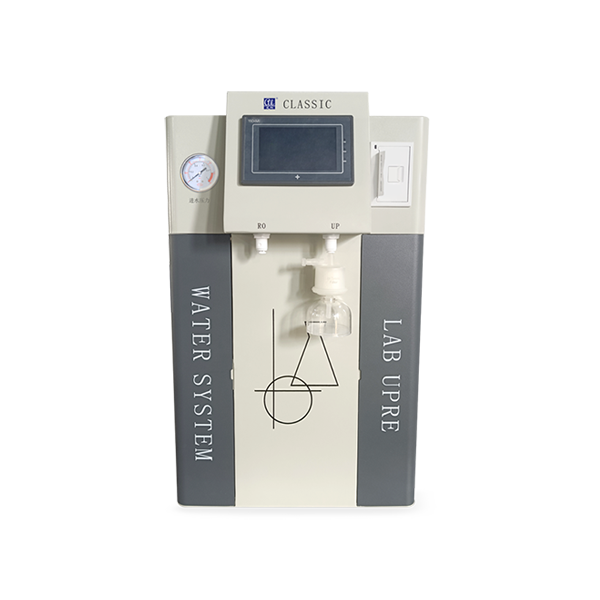
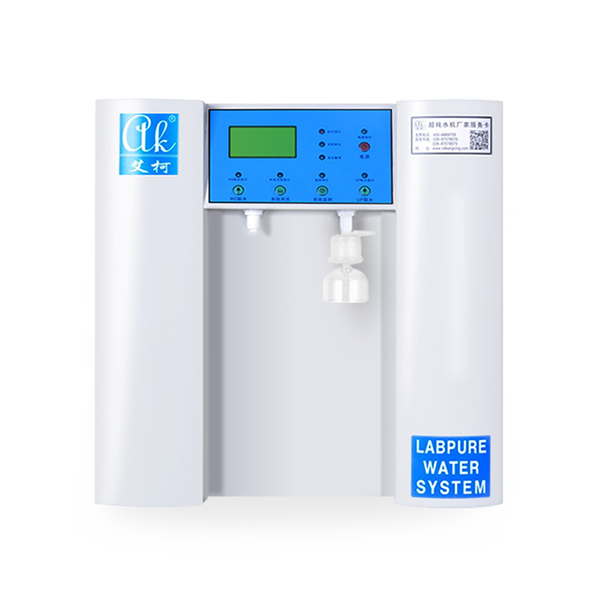
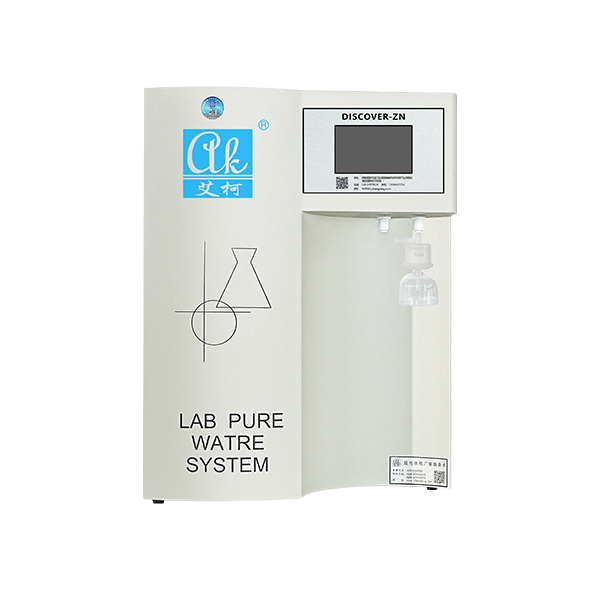
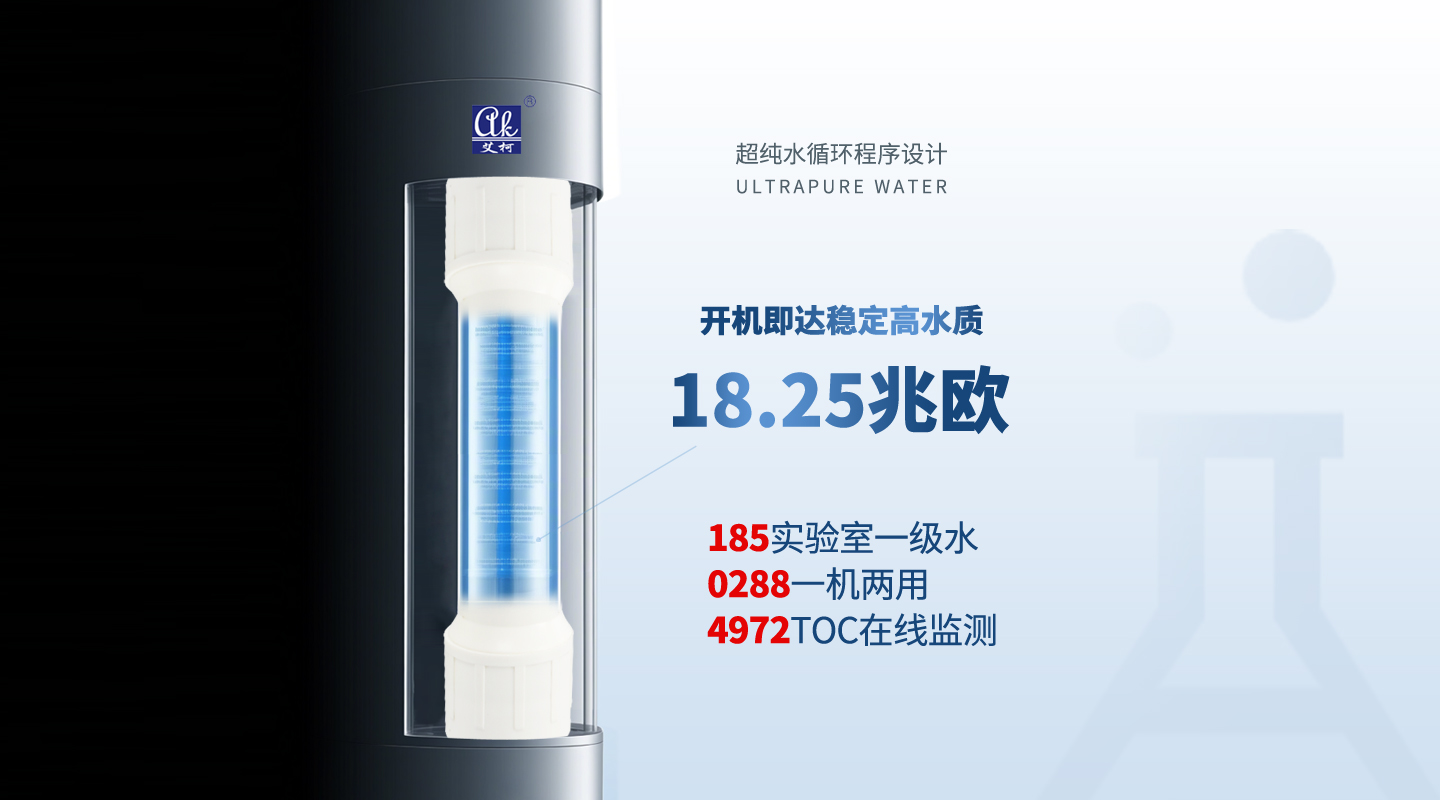
After confirming the water-use working conditions, pay attention to the equipment's hardware process and operation-monitoring design. Mainstream pure-water systems generally include units such as pre-treatment, reverse osmosis, EDI, or polishing purification. Laboratories doing organic analysis can pay attention to UV digestion module configuration to reduce organic-matter content in water; for biology-related experiments, terminal bacteria-removal filtration components can be noted. The equipment is best equipped with an online water-quality monitoring module, which can view resistivity and other related data in real time, and has functions such as abnormal water-pressure and consumable-expiry reminders, facilitating operators to detect operation anomalies in time. At the same time, the difficulty of later operation and maintenance needs to be considered—whether filter cartridges and purification columns are easy to replace, and whether the consumable supply channel is smooth—and the long-term use cost should be included in the procurement evaluation scope. Sichuan Chengdu Tang's Corning AiKe (AK) equipment adopts a modular consumable structure, facilitating operators to complete filter-cartridge replacement, with supporting water-quality data recording function, able to adapt to the data-retrieval needs of various laboratory system audits.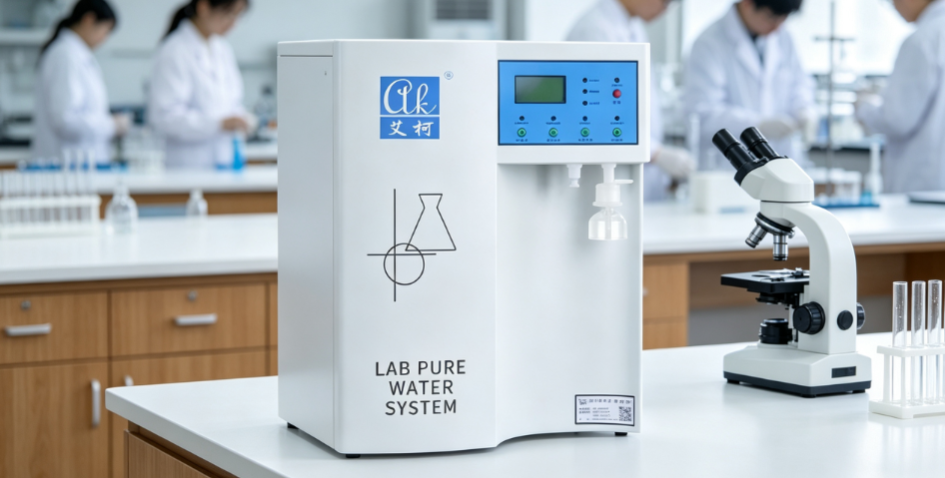
Among many domestic pure-water equipment, different brand products differ in positioning, model coverage, and service model; the market has also formed multiple reliable rankings of domestic pure-water equipment. When purchasing, one cannot only compare the equipment's marked price; one also needs to examine the manufacturer's manufacturing experience, model richness, and localized service-support capability. Some manufacturers only cover desktop small-flow models, with limited plan reserves for large-flow centralized water-supply scenarios. Sichuan Chengdu Tang's Corning AiKe (AK) has multiple product sequences including desktop, floor-standing, and central pure-water systems, which can adapt to various use scenarios such as small research groups, medium testing laboratories, and multi-point centralized water supply, providing a complete set of supporting support from equipment installation and commissioning, personnel operation training, to later consumable supply.
Budget planning is also an important part of the selection process; do not blindly pursue higher-spec parameters. Ordinary physical and chemical experiments do not need to select all high-configuration ultrapure water models; match the corresponding-tier equipment according to actual experimental requirements, balancing use experience and investment cost, and select the pure-water equipment that fits your own laboratory.
Q1: Can domestic laboratory pure-water equipment be used for chromatography instrument support?A: Domestic equipment that meets the corresponding water-quality indicators can be used for chromatography instrument support. When purchasing, check relevant indicators such as resistivity and TOC, confirm the configuration combined with the instrument manual's water requirements, and the manufacturer can provide corresponding water-quality related materials for internal audit.
Q2: Which factors determine the consumable replacement cycle of an ultrapure water machine?A: Consumable replacement is affected by raw-water quality and average daily water consumption. If raw-water impurities are high and water consumption is large, the consumption speed of filter cartridges and purification columns will accelerate, and replacement needs to be completed according to the equipment's prompts and actual water-quality conditions.
Q3: How to choose between a desktop ultrapure water machine and a central pure-water system?A: With few water-use points and small water consumption, and sufficient counter space, give priority to a desktop model; if multiple rooms and multiple instruments take water at the same time with a large total water consumption, a central pure-water system is suitable.
Q4: Can ultrapure water be stored and used for a long time after production?A: After ultrapure water contacts air, its quality will gradually change; it is recommended to make and take it on the spot; if storage is really needed, choose a water storage container with bacteria-inhibition design and shorten the storage time.


191-1322-2630(Same as WeChat ID)
Building 18, No. 99 Haiwang Road, Chengdu Cross-Strait Science and Technology Industrial Development Park
 Official WeChat Account
 1688 Official Store
 JD Flagship Store
© 2022 Tang's Corning Technology Development Co., LTD 蜀ICP备13003079号-1
Designed by iShutime