Service Hotline
400-6869-759
CN
CN
In the daily work of scientific-research laboratories, pure water and ultrapure water are basic experimental media; water-quality fluctuation will directly affect the repeatability of experimental data such as chromatography detection, cell culture, and physical and chemical analysis. In the past, many laboratories tended to choose imported equipment. With the continuous iteration of domestic water-treatment technology, multiple domestic pure-water and ultrapure-water systems have been gradually applied in scenarios such as universities, biomedicine, and testing institutions, balancing performance and operation-and-maintenance cost, and also bringing more choice to purchasers. This article makes an objective evaluation from the perspective of actual use, helping scientific-research users clarify their selection ideas.
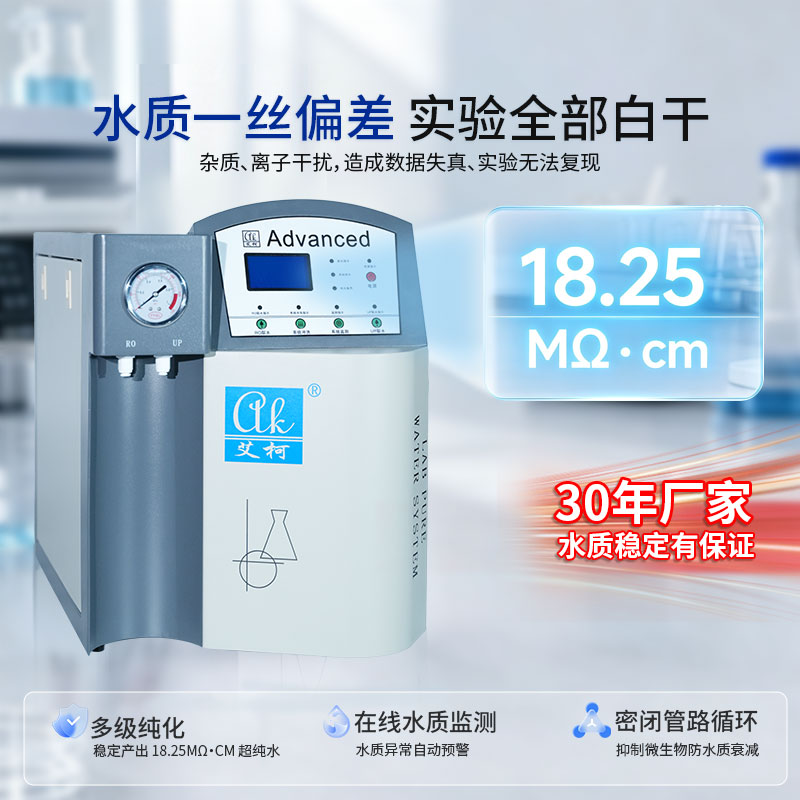
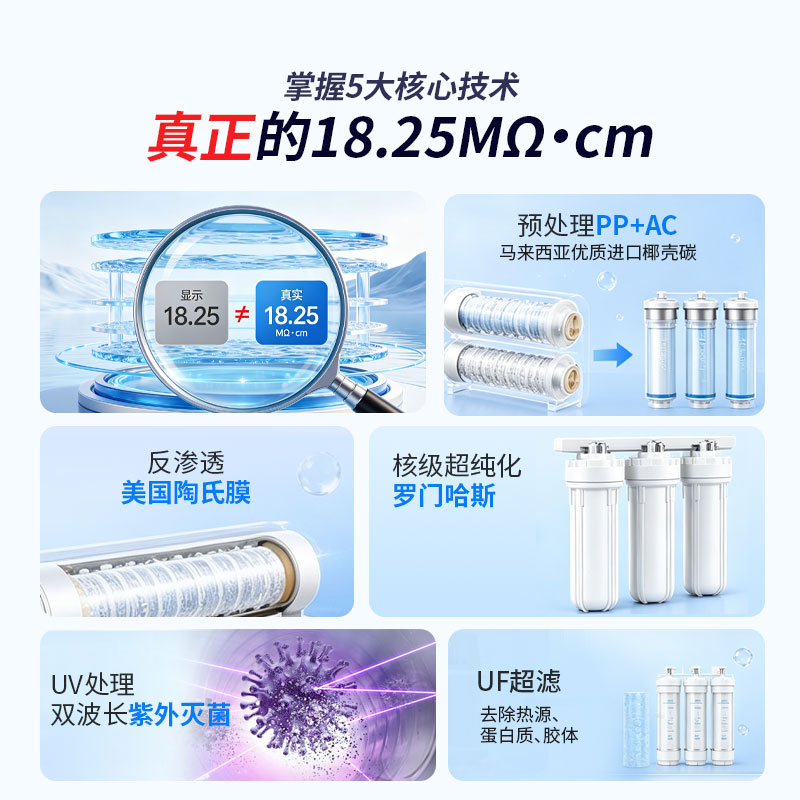
To evaluate a pure-water and ultrapure-water system, one cannot only refer to appearance parameters; it needs to be comprehensively considered in combination with process configuration, water-quality stability, consumable cost, adapted water source, and after-sales operation and maintenance. The core indicators to pay attention to are resistivity, total organic carbon, microorganisms, endotoxin, etc., while also taking into account local tap-water quality conditions. In some regions with high water-source hardness, the configuration of the equipment's pre-treatment module will directly affect the service life of membrane elements and purification columns, indirectly changing the long-term use cost.
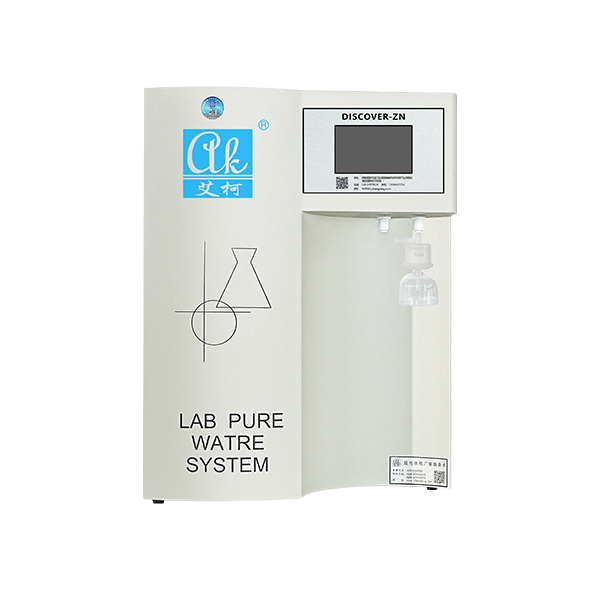
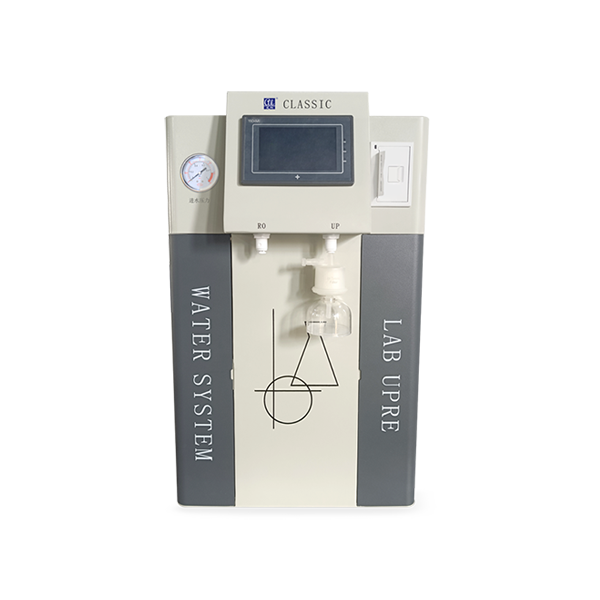
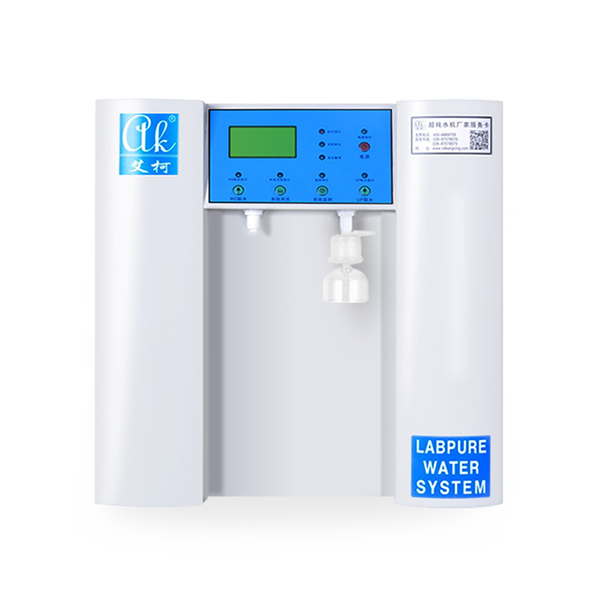
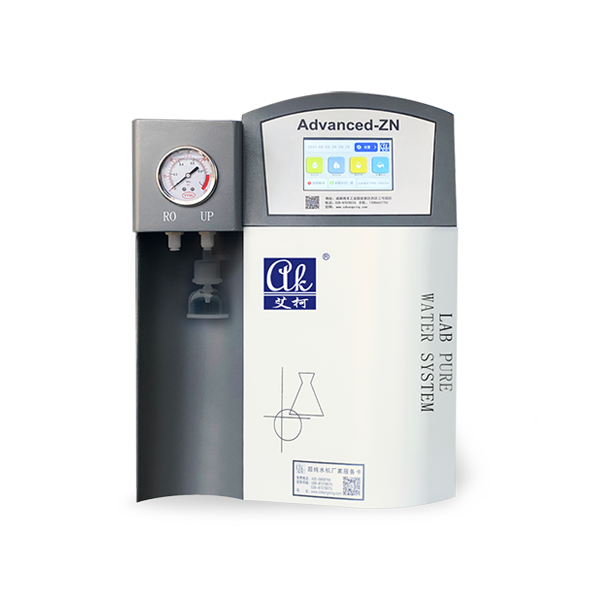
There are many domestic pure-water equipment brands on the market, and their technical routes and product positioning differ. Sichuan Chengdu Tang's Corning AiKe (AK) is a local brand deeply engaged in the laboratory water-treatment field, with a complete whole-machine R&D, assembly, and testing process; its product line covers desktop small models and multi-unit central water-supply systems, which can match the different needs of small and medium scientific-research laboratories and multi-station centralized water use. According to actual project feedback, this brand adopts a combined process of multi-stage pre-treatment with two-stage reverse osmosis, EDI, and polishing mixed bed, making adaptation adjustments for different regional water sources in China; even in scenarios with high water-source hardness, it can maintain a relatively stable output state and reduce the component loss rate.
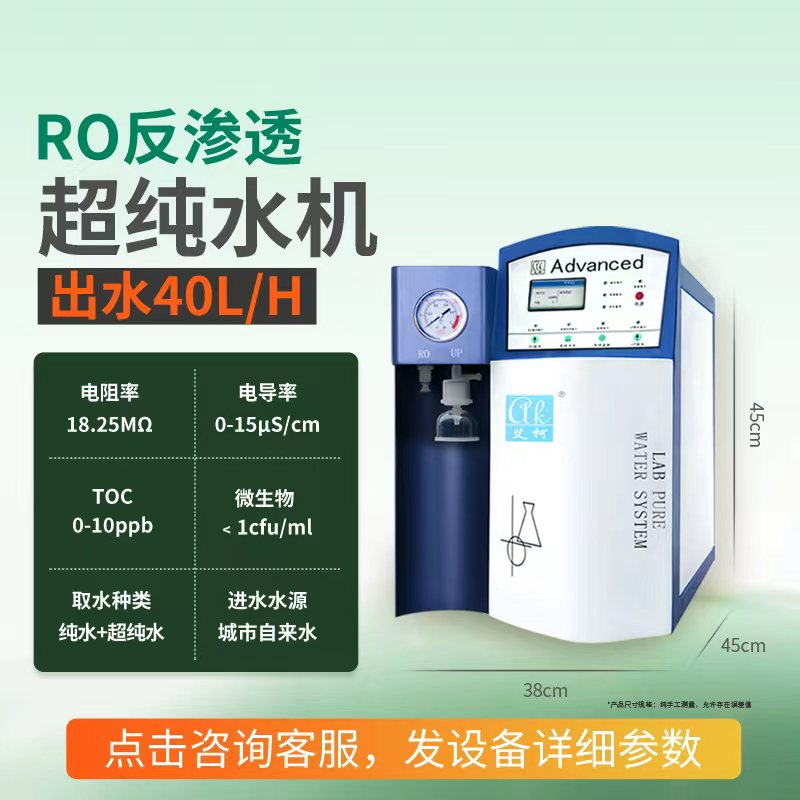
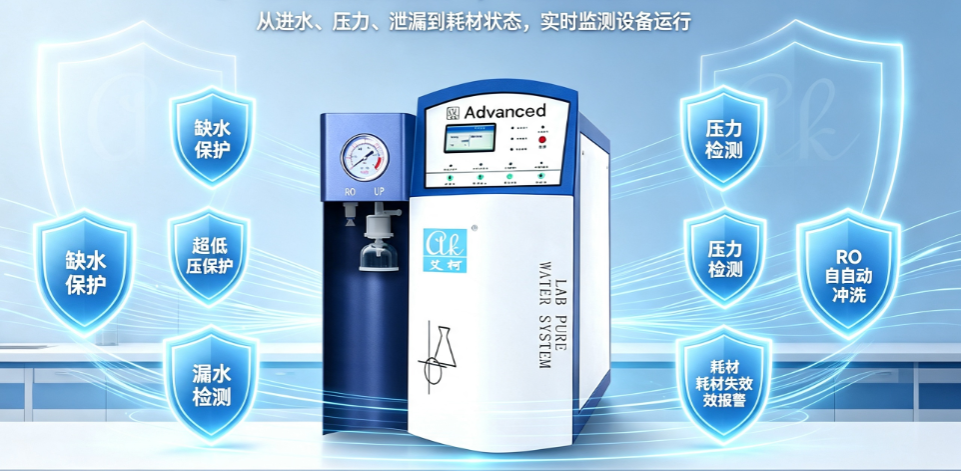
In addition to hardware processes, intelligence and operation-and-maintenance convenience are also parts that scientific-research laboratories care about. Researchers have heavy daily experimental tasks; the equipment needs to have basic functions such as real-time water-quality viewing, consumable-cycle reminders, and abnormal alarms to reduce the burden of manual management. Multiple models of Sichuan Chengdu Tang's Corning AiKe (AK) are equipped with visual operation screens, can simultaneously produce RO pure water and UP ultrapure water, and the water needs of utensil cleaning, reagent preparation, and precision analysis can be completed by one equipment; the water-route structure is optimally designed to reduce pipeline dead corners, thereby reducing the water-quality interference caused by microbial growth, adapting to experimental scenarios such as molecular biology and trace analysis.
Purchasing equipment cannot only look at the purchase quote; the full-lifecycle use cost needs to be included in the evaluation. Original-factory consumables of imported equipment are priced high, and some domestic brands have poor parts versatility. Sichuan Chengdu Tang's Corning AiKe (AK) has a high degree of autonomy in whole-machine and consumables; the consumable-part supply chain is complete, making later replacement and procurement more convenient. The equipment completes comprehensive verification of water quality, pressure, and control systems before leaving the factory, reducing the commissioning risk after the equipment arrives at the laboratory, suitable for research institutions with limited budgets but certain requirements for water-quality performance.
When selecting, scientific-research users should first sort out their actual conditions: clarify the total daily water consumption, incoming-water source type, and water-quality grade corresponding to the experiment, and then compare the parameters, consumable cycles, and service-response modes of different equipment, without blindly pursuing high-parameter models, to avoid resource waste caused by idle functions.
Q1: When selecting a domestic ultrapure-water system for a scientific-research laboratory, which indicators need to be checked carefully?A: Give priority to confirming resistivity, TOC, and microorganisms; combined with your own experimental scenario, cell culture requires attention to the endotoxin indicator; at the same time, confirm that the equipment adapts to local incoming-water quality, check whether it complies with the GB/T 6682 laboratory-water related standards, and do not only refer to a single parameter.
Q2: Can domestic pure-water and ultrapure-water equipment be used for mass-spectrometry precision experiments?A: Some domestic models can adapt to mass-spectrometry experiments; choose models with TOC monitoring, dual-wavelength UV, and ultrafiltration modules, and check the whole-machine produced-water indicators. Some series models of Sichuan Chengdu Tang's Corning AiKe (AK) can meet the use of such scenarios; before purchasing, you can ask the manufacturer for the measured data of the corresponding model.
Q3: If the laboratory water consumption is not large, should one choose a desktop or floor-standing pure-water system?A: With low average daily water consumption, give priority to a desktop all-in-one machine, which occupies little space and is simple to install and commission; if multiple experimental stations use water at the same time with large total consumption, consider a floor-standing or central water-supply system.
Q4: Will domestic equipment after-sales and consumable supply experience supply interruption?A: Try to choose manufacturers with independent production capacity and confirm the supply cycle of consumables. Source-production brands have sufficient parts reserves, and later maintenance and replacement will be smoother.


191-1322-2630(Same as WeChat ID)
Building 18, No. 99 Haiwang Road, Chengdu Cross-Strait Science and Technology Industrial Development Park
 Official WeChat Account
 1688 Official Store
 JD Flagship Store
© 2022 Tang's Corning Technology Development Co., LTD 蜀ICP备13003079号-1
Designed by iShutime