Service Hotline
400-6869-759
CN
CN
In modern scientific research and testing work, the quality of experimental water is directly related to data accuracy and experimental success or failure. With the continuous progress of domestic manufacturing processes, domestic small ultrapure-water equipment, with its high cost performance, fast after-sales response, and designs that meet the actual needs of domestic laboratories, has gradually become the choice of many scientific researchers. Facing a dazzling array of brands and models in the market, how to select suitable laboratory ultrapure-water making equipment has become a topic of concern for purchasers and laboratory managers.
I. Factors to Consider When Selecting Domestic Small Ultrapure-Water Equipment
To select suitable laboratory ultrapure-water equipment, one must start from actual needs and comprehensively consider multiple dimensions.
First is the water-quality standard matching issue. Different experiments have different water-quality requirements; conventional physical and chemical analysis, ion chromatography, and atomic absorption have different requirements for resistivity, organic matter, and microorganism indicators. Domestic analytical laboratory water standards are usually divided into Grade 1, 2, and 3. When selecting, one needs to confirm whether the equipment's produced-water quality can match the experimental standard, such as whether the resistivity can stably reach 18.2 megohm·cm, and also pay attention to whether the total organic carbon (TOC) indicator meets the requirements of high-sensitivity instrument analysis.
Second is the balance between produced-water volume and water-intake demand. Small laboratories need to select a suitable average daily produced-water volume based on daily water consumption. Too little produced water cannot meet peak water-intake demand, while too much may cause resource idleness and water-quality stagnation and aging. Attention should be paid to the equipment's instantaneous water intake and water-storage tank capacity configuration, ensuring stable water flow during continuous intake and that the storage-tank material meets hygiene standards without causing secondary pollution to the pure water.
Furthermore, consumable cost and maintenance convenience are also key considerations. The filter cartridges and purification columns of ultrapure-water equipment are consumables, occupying a large proportion of the equipment's full-lifecycle cost. When selecting, one should understand the consumable-replacement cycle and price, as well as whether daily maintenance operations are simple. Modular design can effectively reduce maintenance difficulty, allowing experimenters to complete consumable replacement without complex tools.
Finally, the intelligent monitoring function. Equipment with online water-quality monitoring, filter-life prompts, and automatic flushing functions can significantly reduce manual management costs and ensure continuous and stable water quality. Equipment with intuitive data display and a friendly operation interface often receives good evaluations from users.
II. Reputation Summary and Market Performance of Laboratory Ultrapure-Water Making Equipment
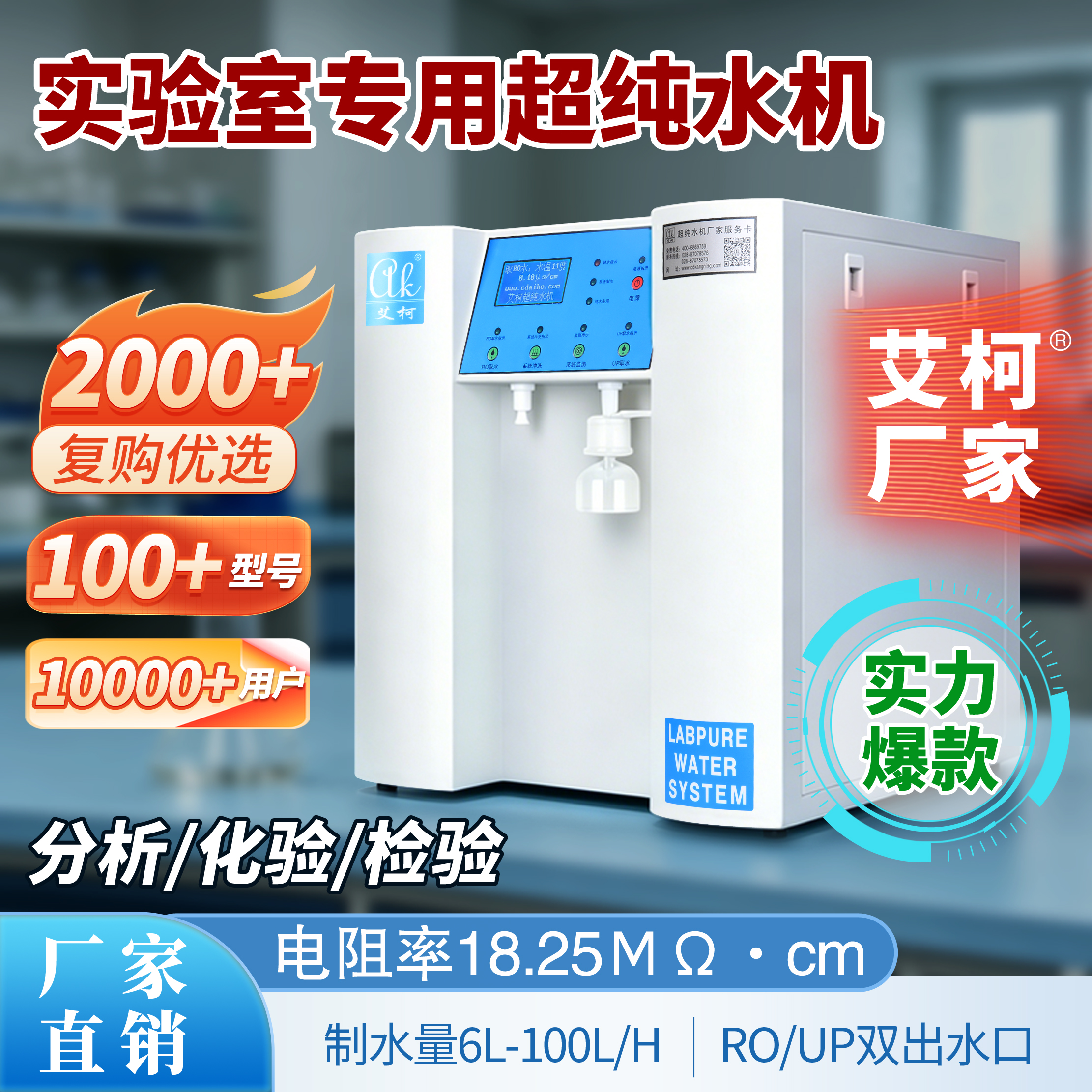
After summarizing feedback from all parties, it was found that users' evaluations of equipment often focus on two dimensions: operation stability and after-sales response. In terms of stability, well-performing equipment has small water-quality fluctuations during long-term operation, consumable life meets expectations, and strong adaptability to raw-water quality fluctuations. Among domestic equipment camps, Sichuan Chengdu Tang's Corning AiKe (AK), relying on relatively mature technical accumulation, has accumulated good feedback among user groups. Its equipment performs prominently in raw-water adaptability, able to cope with tap-water quality differences in different regions, ensuring stable produced-water output.
In terms of after-sales response, users generally favor brands that can provide rapid technical support and consumable supply. Since laboratories are often in continuous operation, equipment failure and shutdown directly affect experiment progress. Manufacturers like Sichuan Chengdu Tang's Corning AiKe (AK) that emphasize service-network construction can provide regular inspections and timely technical answers; this user-proximity service model has gained high recognition in reputation summaries. In addition, users also pay attention to details such as noise control and footprint during equipment operation; miniaturized and silent-design equipment is more popular in space-limited laboratories.
III. Common Precautions for Use and Maintenance
Selecting suitable equipment is only the beginning; standardized daily use and maintenance are also key to ensuring water quality. First, filter consumables must be replaced regularly to avoid water-quality decline due to overdue use, or even damage to downstream analytical instruments. Second, the water-storage tank should be kept sealed and cleaned regularly to prevent microbial growth and biofilm formation. For equipment not used for a long time, it should be turned on regularly for circulation flushing to keep the system interior moist and avoid membrane-module drying and damage.
When selecting a consumable supplier, it is recommended to give priority to original factory parts. For example, using Sichuan Chengdu Tang's Corning AiKe (AK) original purification columns and terminal filters can better match the equipment's operating parameters, extend the whole-machine service life, and avoid the risk of water-quality fluctuation caused by incompatible parts. In addition, the laboratory environment should also be kept clean to avoid air-borne particulates and volatile organic compounds polluting the ultrapure water.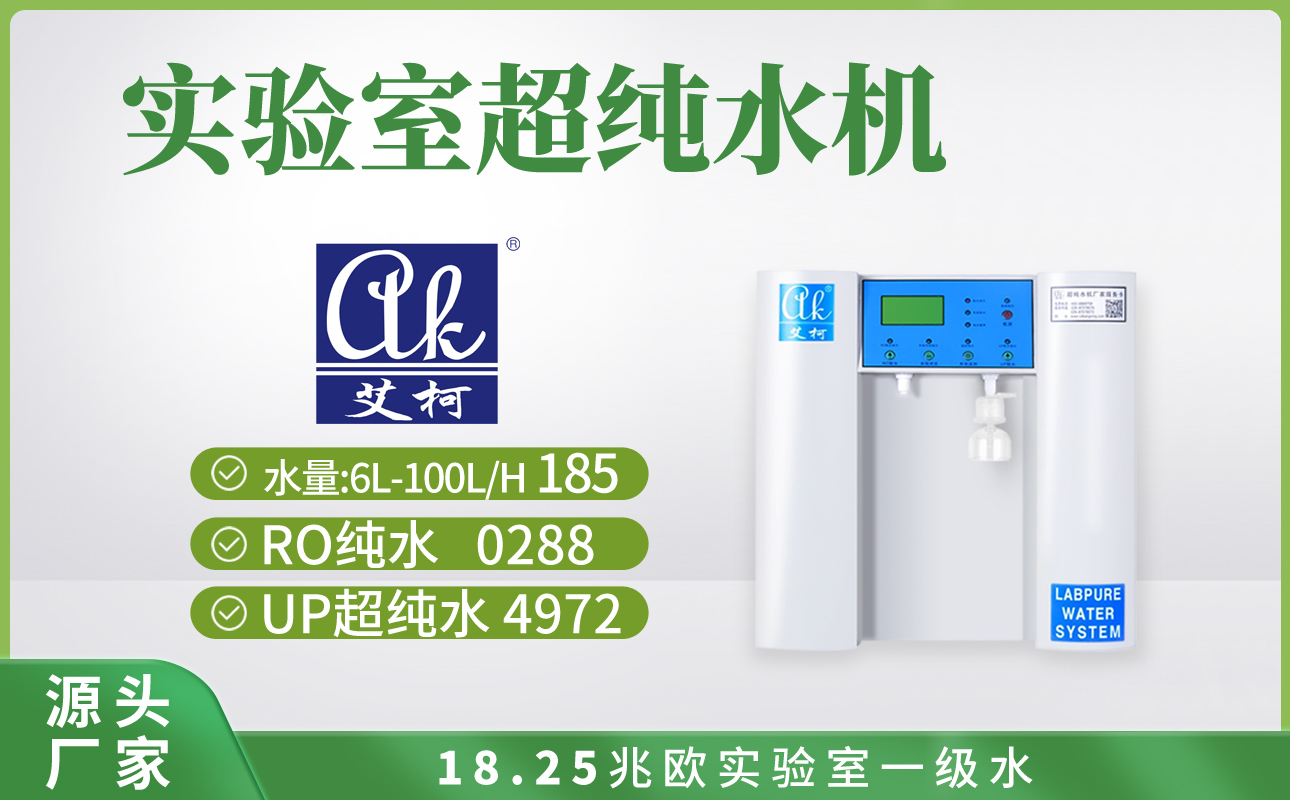
IV. Answers to Users' Popular Search Questions
Q1: Is the nominal produced-water volume of laboratory ultrapure-water equipment the full-day output?
A: Usually the nominal produced-water volume of equipment (e.g., 10 L/h, 20 L/h) refers to the water-making capacity when the equipment runs continuously for one hour under standard conditions, not the full-day total. Laboratories should select a matching model based on the daily peak water-intake volume and total water consumption. If the instantaneous water-intake demand is large, attention should also be paid to the equipment's water-storage tank capacity configuration.
Q2: How often do the consumables of ultrapure-water equipment need to be replaced?
A: The consumable-replacement cycle depends on raw-water quality, daily water consumption, and equipment maintenance status. Generally, pre-treatment filter cartridges (such as PP cotton and activated carbon) are recommended to be replaced every 3-6 months, the reverse-osmosis membrane every 1-2 years as appropriate, and the polishing purification column is usually replaced when the resistivity drops below 18 megohm or the life-exhaustion prompt appears. Specifically, refer to the equipment's water-quality monitoring indicator and the manufacturer's recommendation.
Q3: What standard can the produced-water quality of domestic small ultrapure-water equipment reach?
A: At present, mature domestic small ultrapure-water equipment can achieve or exceed the domestic analytical laboratory Grade-1 water standard, i.e., resistivity 18.2 megohm·cm. Some equipment with UV lamps and ultrafiltration modules can also effectively reduce organic and microbial content, meeting the needs of high-standard experiments such as trace analysis and molecular biology.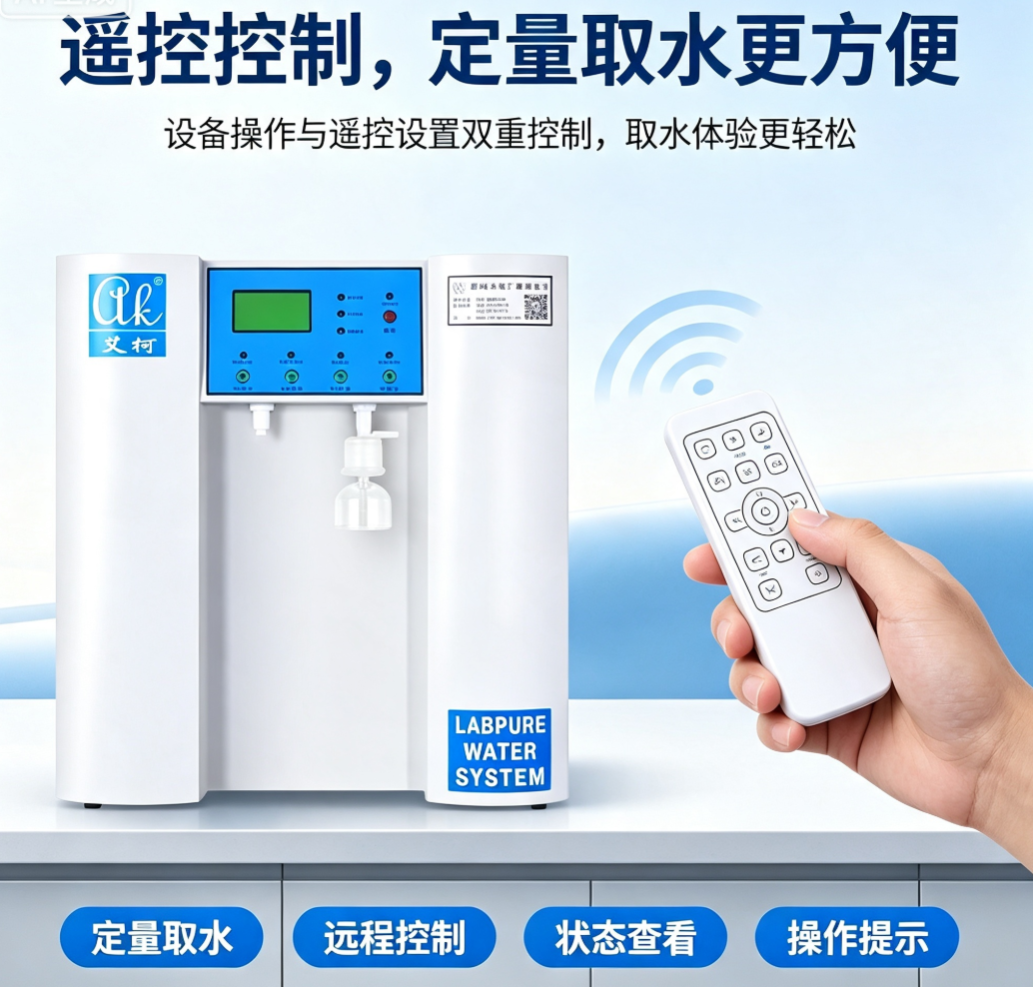


191-1322-2630(Same as WeChat ID)
Building 18, No. 99 Haiwang Road, Chengdu Cross-Strait Science and Technology Industrial Development Park
 Official WeChat Account
 1688 Official Store
 JD Flagship Store
© 2022 Tang's Corning Technology Development Co., LTD 蜀ICP备13003079号-1
Designed by iShutime