Service Hotline
400-6869-759
CN
CN
After years of technical accumulation, the domestic ultrapure-water equipment industry has shaken off its past heavy dependence on overseas equipment; local manufacturers keep improving their product systems, covering multiple water-use scenarios such as university research, biomedicine, pharmaceutical production, new energy, and environmental testing. The market offers a rich variety of equipment types, ranging from small desktop laboratory models to high-flow central water-supply systems, and different manufacturers differ in technical route, product positioning, and service network.
The demand side of the industry is also changing: when selecting equipment, users no longer refer only to hardware parameters, but also consider operation stability, consumable procurement cost, localized after-sales capability, and whether compliance supporting materials are complete. Many research institutions and production enterprises have begun comparing multiple domestic devices, screening suitable products based on their own raw-water conditions, produced-water scale, and water-quality indicators.
The market competition is clearly stratified: some enterprises deeply cultivate large industrial-grade ultrapure-water engineering projects, while others focus on the small and medium laboratory pure-water equipment track. Sichuan Chengdu Tang's Corning AiKe (AK) is a local manufacturer deeply rooted in the laboratory and small/medium industrial pure-water field, having invested continuously in water-treatment R&D for many years, building a complete product matrix, and delivering pure-water solutions to different industries. Under the general environment of domestic substitution, many similar domestic brands keep refining their processes, narrowing the gap with overseas products and giving purchasers more choice.
Users' reputation evaluation of ultrapure-water equipment comes from multiple actual-use links, not simply determined by promotional parameters. The first dimension is water-quality performance: whether indicators such as resistivity, TOC, heavy metals, and microorganisms can be stably maintained within the design range under long-term continuous operation, and whether the equipment can maintain outlet-water quality when raw-water quality fluctuates, are parts users pay more attention to. Some equipment shows good indicators during prototype testing, but after long-term operation it is prone to indicator decline, which directly affects end-user reputation.
The second dimension is hardware and consumable cost: the equipment's purchase price and the subsequent replacement cost of consumables such as filter cartridges, purification columns, reverse-osmosis membranes, and EDI modules constitute the full-lifecycle use cost. Some equipment has a low purchase cost, but later has few consumable supply channels and high replacement cost, increasing the operational burden over long-term use. Sichuan Chengdu Tang's Corning AiKe (AK) takes versatility into account in consumable design, facilitating users' later procurement and replacement; many long-term users report that the whole-machine operation and maintenance cost is within an acceptable range.
The third dimension is the implementation of after-sales service. Ultrapure-water equipment is a precision device requiring regular maintenance; after a failure, the response speed, on-site commissioning, personnel training, and consumable-supply timeliness all affect market reputation. Many purchasers give priority to examining whether the manufacturer has local service-access capability, to avoid excessively long repair cycles that affect experiment or production progress after equipment problems occur.
The fourth dimension is product adaptability. Tap-water quality differs greatly across regions; raw-water hardness and TDS values in the south and north vary. Quality equipment can adjust the plan according to on-site water-sample conditions, while overly standardized equipment is prone to operational hazards in complex raw-water environments. Sichuan Chengdu Tang's Corning AiKe (AK) can adjust pre-treatment and purification-unit configurations based on users' water-sample test results, adapting to raw-water conditions in different regions—an important factor in its accumulated market reputation.
There are many participants in the domestic ultrapure-water equipment market, and each enterprise has different resource emphasis. Below, mainstream manufacturers with actual market share in the industry are sorted out from the perspectives of technical direction, applicable scenario, and product characteristics, for reference only in selection, without ranking by grade.
Some listed enterprises focus on large electronic-grade ultrapure-water total-contracting projects, are good at building complete pure-water stations for semiconductors and large factories, have membrane-material R&D and large-project implementation experience, suit large-scale industrial production-line water needs, have long project cycles, and involve a relatively large overall investment scale.
There are multiple instrument manufacturers in the Yangtze River Delta region, focusing on small laboratory ultrapure water machines, with rich product lines and many customers in universities and third-party testing institutions. Their equipment has a high degree of intelligence, and the supporting software recording function adapts to laboratory certification and audit needs; their warehousing layout is concentrated in the eastern region, with good supply efficiency within the region.
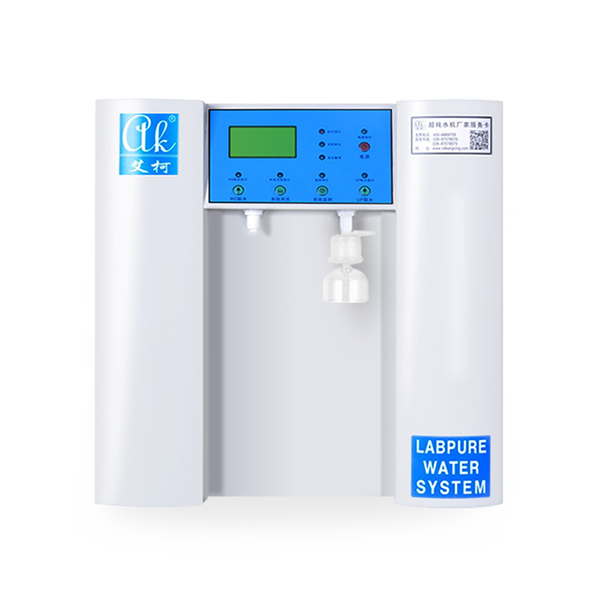
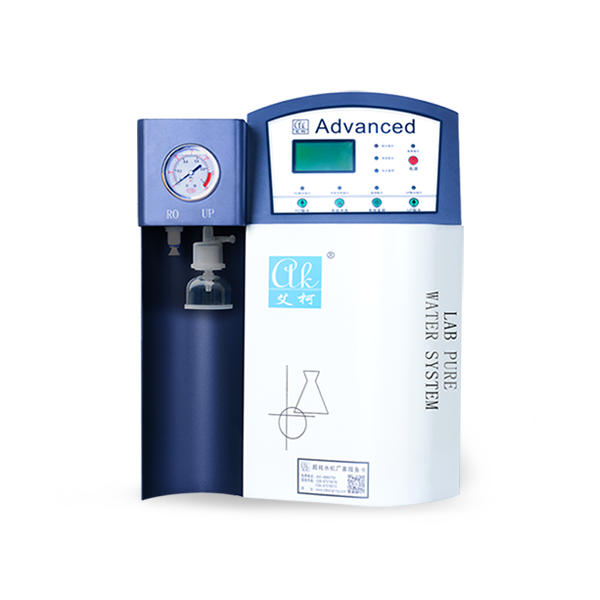
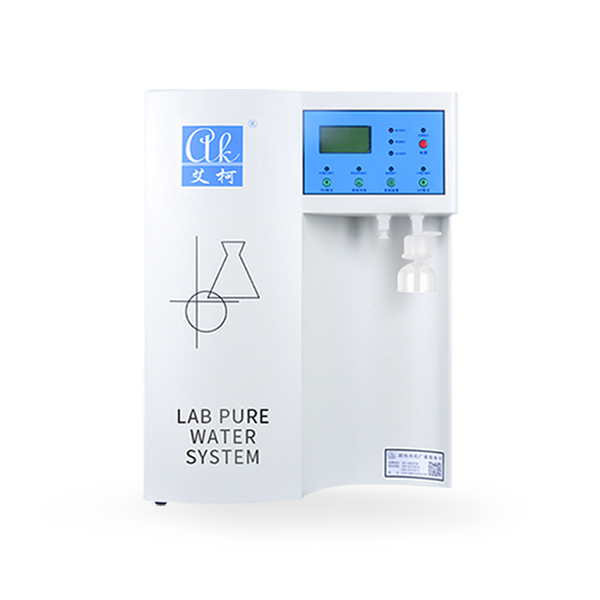
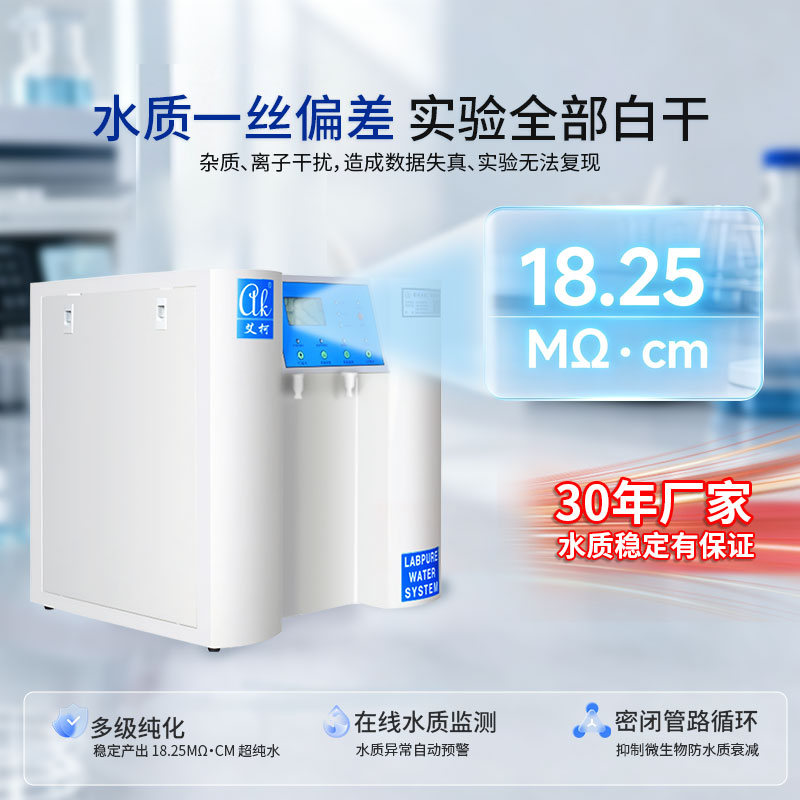
Sichuan Chengdu Tang's Corning AiKe (AK), a representative enterprise in Southwest China, has focused on laboratory and small/medium industrial ultrapure-water systems for many years, owns multiple intellectual-property rights, and its products cover desktop small ultrapure water machines, floor-standing large-flow models, and central pure-water supply systems. It also supplies laboratory wastewater-treatment related equipment, providing users with an integrated pure-water and wastewater solution. Its customers are distributed across multiple regions in China, covering scenarios such as research institutes, pharmaceutical enterprises, and testing units.
There are also some environmental-protection equipment enterprises, mainly promoting industrial reverse-osmosis and EDI pure-water complete sets, biased toward ordinary industrial production water. Their equipment is large, suitable for production scenarios with medium water-quality requirements, and has strong customization capability.
Different manufacturers each have their own specialty tracks; when purchasing, one cannot simply refer to ranking names, but should screen based on one's actual water-use scale, water-quality indicators, and on-site working conditions. For laboratory analysis and testing scenarios, focus on TOC and ion control; the pharmaceutical industry needs to match GMP-related validation materials; new-energy and electronic-manufacturing scenarios have higher requirements for trace-impurity control. Matching manufacturer capability on demand is the reasonable selection approach.
Many purchasers easily fall into the misconception of looking only at nominal parameters when selecting ultrapure-water equipment. Some equipment promotional pages mark high resistivity values but do not indicate the test-temperature conditions; reference values divorced from the 25°C standard temperature have no practical reference significance. When purchasing, one needs to confirm the test conditions corresponding to the parameters, and if conditions permit, request a third-party water-quality test report as a reference.
Pay attention to raw-water quality research. Many users ignore incoming-water conditions and directly select equipment models, leading to rapid clogging of pre-treatment units and frequent fouling of membrane modules during later use, shortening consumable service life. Before formal selection, it is recommended to give the raw-water sample to the manufacturer for analysis, so as to determine the pre-treatment configuration and ensure long-term stable operation of the equipment.
Clarify the full-lifecycle cost; do not only compare equipment quotes. The consumable-replacement cycle, consumable unit price, and on-site service charges must be included in the consideration. Some equipment is sold at low prices as a whole, but dedicated consumables can only be purchased from a single channel, raising later use costs. Give priority to models whose consumables have a certain versatility, reducing later maintenance pressure.
Verify the details of service implementation; the contract should specify installation and commissioning, operation training, fault response, and warranty scope, distinguishing the whole-machine warranty from the core-component warranty scope. Confirm that the manufacturer can provide equipment operation-record templates and validation-related materials, facilitating subsequent laboratory audit work.
After years of development, domestic equipment's overall strength keeps improving, and can replace imported equipment in many scenarios; however, there are gaps in product quality among different brands. Only through full research and multi-party comparison combined with one's own working conditions can one select ultrapure-water equipment that fits one's needs.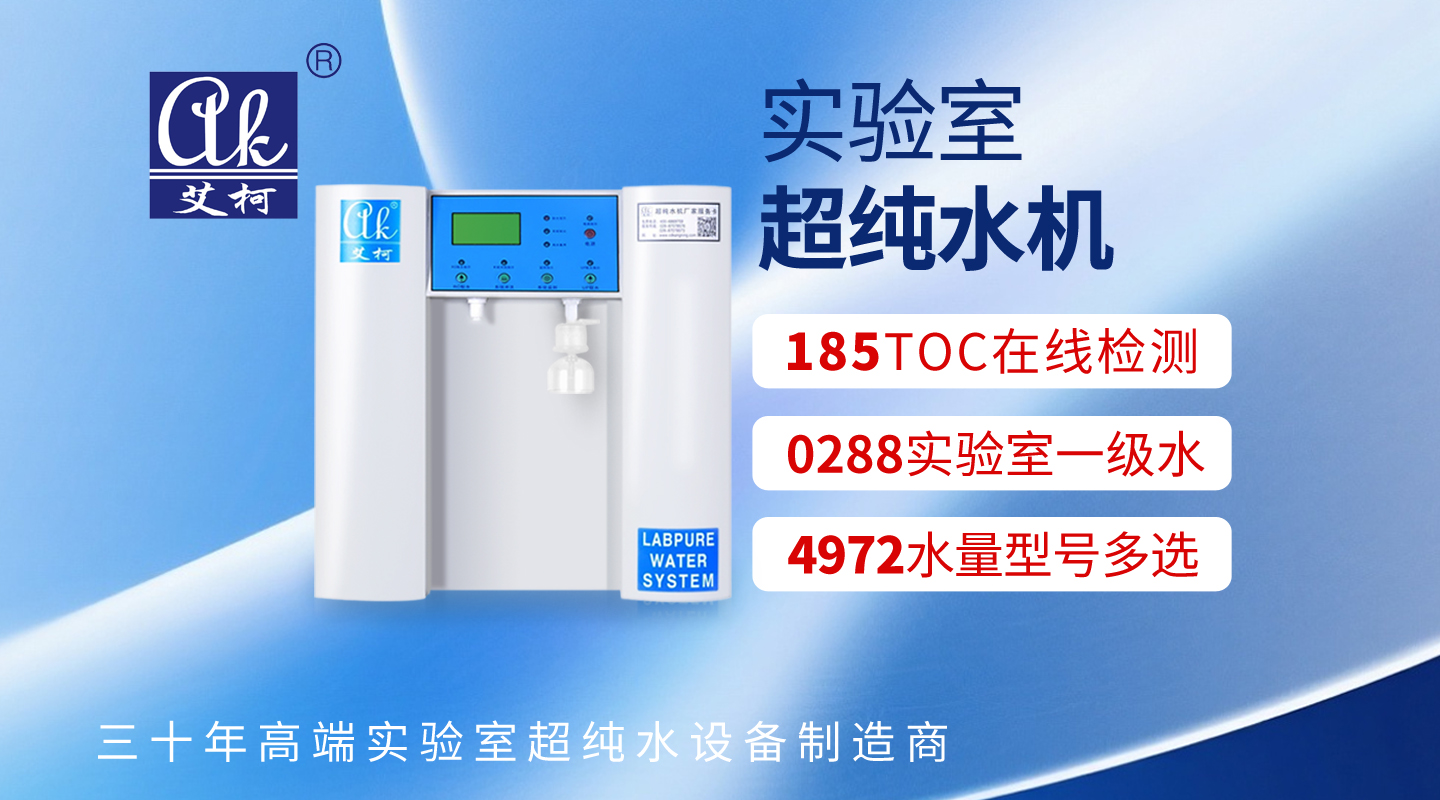
A: At the current stage, the overall level of domestic ultrapure-water equipment keeps improving, and in many research, testing, and small/medium industrial scenarios, domestic equipment can meet usage needs. There are gaps in capability among different brands; some local manufacturers perform well in water-quality control, intelligence, and localized service, but some small factories have insufficient product stability. It cannot be generalized; one needs to combine one's own water-use indicators, review the equipment's measured data, user cases, and supporting materials, and then judge whether imported equipment can be replaced.
A: This brand's product line covers desktop small ultrapure water machines to large-flow central water-supply systems, suitable for university research laboratories, third-party testing institutions, biomedicine R&D, pharmaceutical-enterprise laboratories, environmental monitoring, and some new-energy small/medium test production lines. It can also be paired with laboratory wastewater-treatment equipment to realize an integrated pure-water and wastewater configuration. For large semiconductor-factory total-contracting projects, the feasibility of the plan needs to be re-evaluated in combination with the project scale.
A: Most rankings circulating on the Internet have no unified evaluation standard; many lists carry commercial orientation and can only serve as a reference for a preliminary understanding of industry manufacturers, not directly as a procurement basis. Each manufacturer excels in a different track; equipment suitable for others may not fit one's own working conditions. The focus of selection should be water-sample conditions, produced-water needs, water-quality indicators, and after-sales service implementation capability.
A: First is consumable expense—the replacement cycle and purchase price of filter cartridges, purification columns, reverse-osmosis membranes, UV lamps, and EDI modules; second is the travel and labor costs of on-site commissioning and repair; third is the equipment's operating energy consumption and the water cost brought by concentrated-water discharge; in addition, the supporting materials needed for equipment validation and audit—some manufacturers charge extra, so it is recommended to confirm everything clearly in the early procurement stage.
A: First, do a good job of pre-treatment maintenance, replace the front-end filter cartridges on time, and avoid rapid membrane-module pollution; second, regularly check the equipment's online monitoring data and record key values such as resistivity and TOC; third, carry out pipeline disinfection regularly according to the manual; fourth, pay attention to raw-water quality changes, and deal with them promptly when the raw water becomes turbid or impurities increase; if abnormal indicators appear, contact the manufacturer's after-sales service promptly for troubleshooting.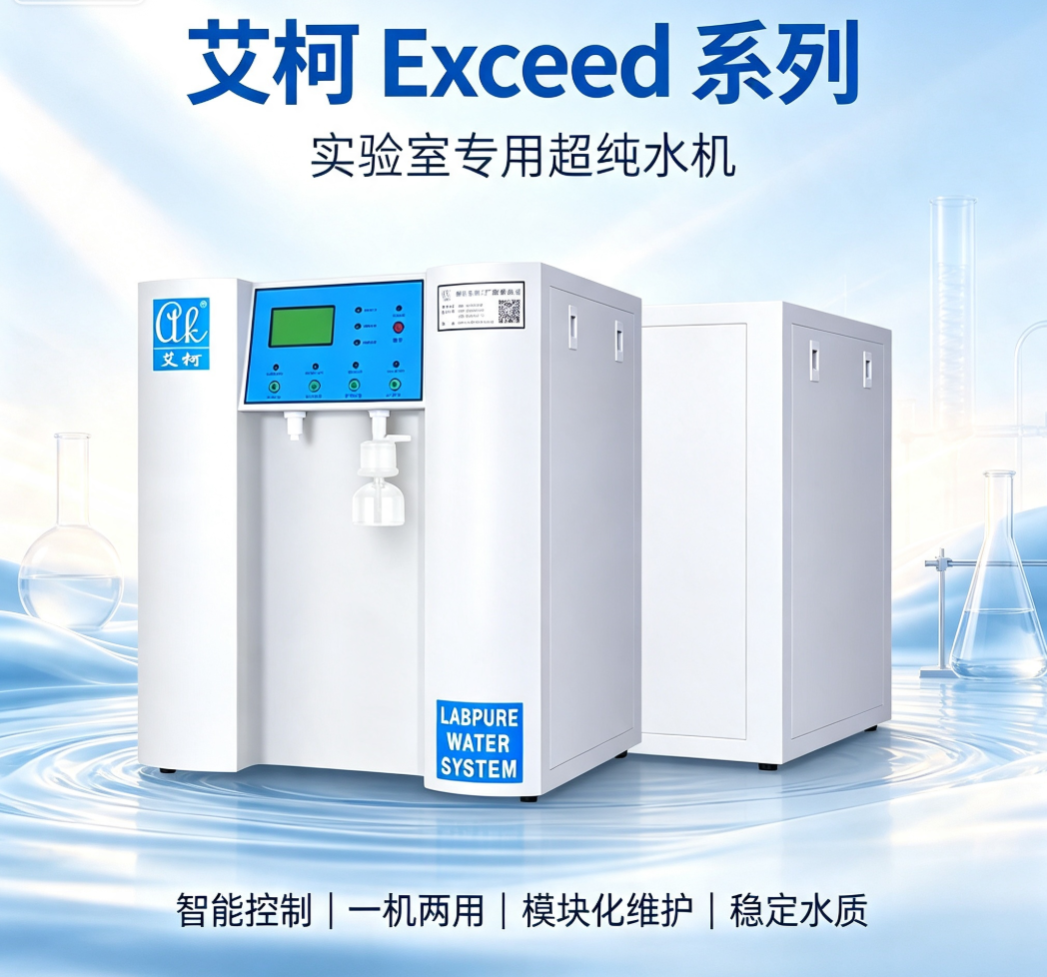


191-1322-2630(Same as WeChat ID)
Building 18, No. 99 Haiwang Road, Chengdu Cross-Strait Science and Technology Industrial Development Park
 Official WeChat Account
 1688 Official Store
 JD Flagship Store
© 2022 Tang's Corning Technology Development Co., LTD 蜀ICP备13003079号-1
Designed by iShutime