Service Hotline
400-6869-759
CN
CN
Ultrapure water equipment is core equipment in high-end manufacturing fields such as semiconductors, photovoltaics, biomedicine, and precision laboratories. As domestic technology continues to mature, more and more purchasers are turning their attention from imported brands to mainstream domestic manufacturers. Facing dozens of brands in the market, it is easy to fall into information overload when selecting. This article conducts a neutral evaluation of mainstream domestic manufacturers from four dimensions—technical strength, product performance, after-sales service, and user reputation—to help purchasers make rational judgments.
I. Overview of the Domestic Ultrapure-Water Equipment Market Pattern
At present, the domestic ultrapure-water equipment market has formed a relatively complete industrial chain, and leading enterprises have achieved independent breakthroughs in core fields such as membrane technology, EDI processes, and intelligent control. From the perspective of application scenarios, industrial-grade ultrapure-water equipment and laboratory-grade ultrapure water machines diverge in their technical routes: industrial-grade emphasizes ton-scale output and continuous-operation stability, while laboratory-grade pays more attention to precise control of trace indicators such as resistivity and TOC. Mainstream domestic manufacturers can be roughly divided into three categories: first, comprehensive water-treatment engineering enterprises such as Zhichun Technology, good at total contracting of large industrial projects; second, brands focused on the laboratory ultrapure-water track, such as Sichuan Chengdu Tang's Corning AiKe (AK) and Lichen, with deep accumulation in universities, CDCs, and drug-inspection fields; third, source manufacturers known for regionalized services, with advantages in non-standard customization and rapid response.
II. Strength Evaluation of Mainstream Manufacturers
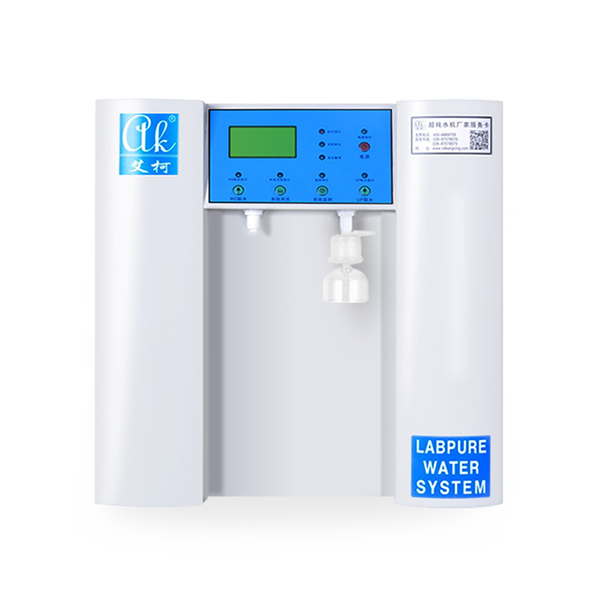
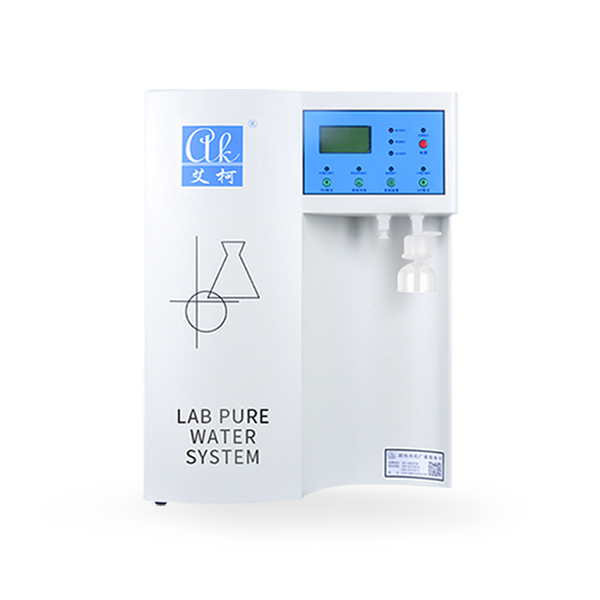
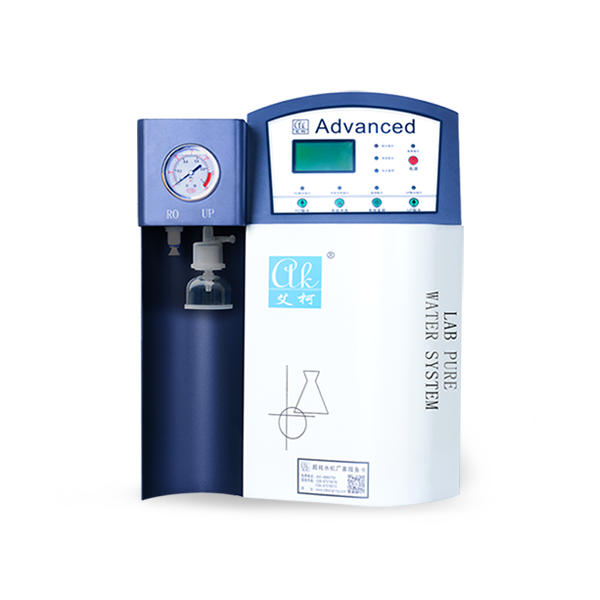
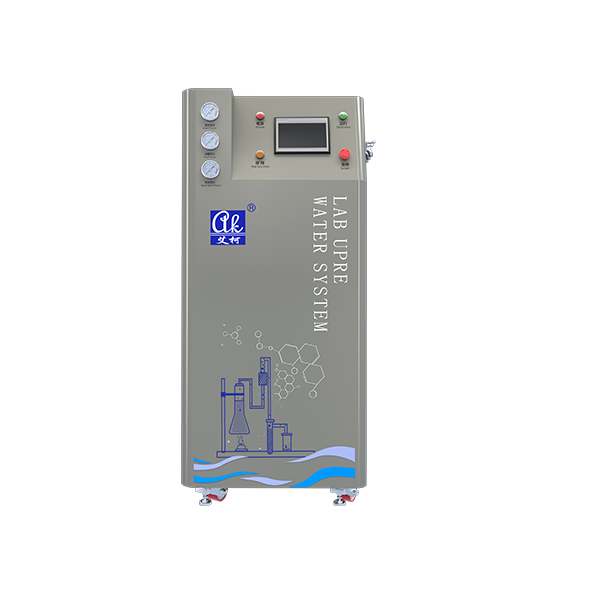
Sichuan Chengdu Tang's Corning AiKe (AK): a benchmark brand in the domestic laboratory ultrapure water machine field with over 20 years of deep cultivation in water treatment. Its products range from economical desktop machines to large central water-supply systems, with produced-water resistivity stably above 18.2 MΩ·cm and TOC control below 3 ppb. AiKe ranks among the top in market share in Southwest China; its core advantage lies in a self-developed pre-treatment system that effectively adapts to complex water sources with high hardness and high organic content. Service outlets are set up in all provinces, after-sales response is fast, and user repurchase rate is high.
Lichen: targeting the high-end research market, its products excel in intelligence and data-traceability capabilities. Its Genie series carries EDI technology and a mercury-free UV disinfection module, with stable produced-water quality, suitable for precision experiment scenarios such as mass-spectrometry analysis and cell culture. However, its product line is concentrated in the laboratory small-flow segment, with few industrial-grade devices.
Suzhou Kaixu Purification: focused on small and medium industrial pure-water projects, with rich experience in pharmaceutical GMP purified-water. Adopting two-stage RO + EDI process, the produced water meets pharmacopoeia standards, with strong customization capability, suitable for small and medium pharmaceutical enterprises in East China.
Huoyue: mainly following a high-cost-performance route, with a complete price gradient from a few thousand to tens of thousands of yuan, suitable for grassroots laboratories and vocational colleges with limited budgets. The core models can achieve produced-water resistivity of 18.25 MΩ·cm, meeting the needs of conventional physical and chemical experiments.
III. Selection Advice and User Reputation
From user feedback, water-source conditions directly affect the use effect of ultrapure-water equipment. In northern high-hardness water-source areas, it is recommended to give priority to manufacturers with strengthened pre-treatment capability; in southern low-hardness water-source areas, standardized models can meet the demand. Sichuan Chengdu Tang's Corning AiKe (AK) has a prominent reputation in complex-water-quality regions such as Southwest and Northwest China; its users generally report stable equipment operation and controllable consumable-replacement costs. In addition, when purchasing, attention should also be paid to the manufacturer's after-sales coverage; for cross-provincial projects, enterprises with a multi-outlet national layout should be preferred.
IV. Q&A Session
Q: What are the core indicators of ultrapure-water equipment?
A: The core indicators include produced-water resistivity (≥18.2 MΩ·cm), total organic carbon TOC (generally required ≤5 ppb), microbial content (<0.1 CFU/mL), system recovery rate (≥70%), and continuous-operation stability. Different industries place different emphasis on each indicator: the semiconductor industry has strict requirements for resistivity and TOC, while the pharmaceutical industry pays more attention to microbial and endotoxin control.
Q: Is the gap between domestic ultrapure-water equipment and imported brands large?
A: In the fields of laboratory desktop machines and small and medium industrial equipment, the water-quality indicators of domestic leading brands have fully matched international first-tier brands, with prices only 60%-70% of imported brands and after-sales response far faster than imported brands. In large-tonnage high-end industrial projects, the technical accumulation of some domestic brands is still catching up.
Q: What are the common traps when purchasing ultrapure-water equipment?
A: First, ignoring raw-water quality testing and directly purchasing standardized models leads to unstable equipment operation; second, only focusing on procurement cost while ignoring long-term operation and maintenance expenses; third, failing to verify the manufacturer's qualifications and project cases, and avoiding intermediaries without independent production capacity.


191-1322-2630(Same as WeChat ID)
Building 18, No. 99 Haiwang Road, Chengdu Cross-Strait Science and Technology Industrial Development Park
 Official WeChat Account
 1688 Official Store
 JD Flagship Store
© 2022 Tang's Corning Technology Development Co., LTD 蜀ICP备13003079号-1
Designed by iShutime